


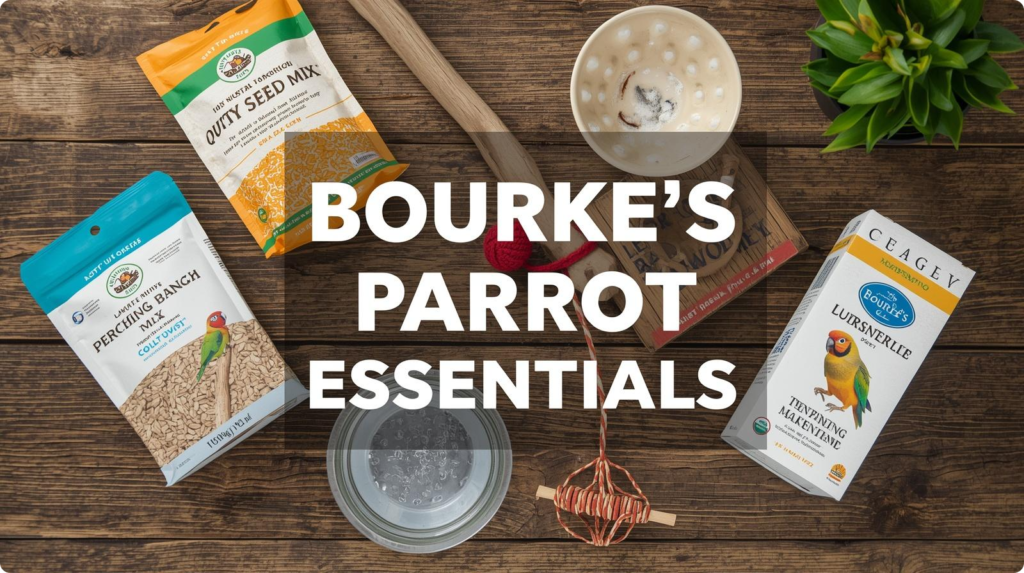


If you’ve recently welcomed one of these gentle, rose-breasted beauties into your home — or you’re planning to — knowing the Top 5 Supplies for Bourke’s Parrots is the single most important step you can take toward responsible ownership
The Bourke’s parrot (Neopsephaus bourkii) is a quiet, mild-tempered species native to the arid interior of Australia, and its care requirements differ noticeably from those of more commonly kept parrots like budgies or cockatiels.
Choosing the right supplies from day one can mean the difference between a bird that merely survives and one that truly thrives for its full 15- to 25-year lifespan.
In this in-depth guide, we’ll walk through every essential supply category, explain why each item matters for this particular species, compare popular product options in a handy table, and answer the questions new owners ask most often.
Whether you’re a first-time bird keeper or an experienced aviculturist adding a Bourke’s parrot to your flock, you’ll find actionable advice you can put to use today.
Why Having the Right Supplies Matters for Bourke’s Parrots


Before we dive into the list, it’s worth understanding what makes this species unique — and why generic “parrot supplies” don’t always cut it.
- Crepuscular activity pattern. Unlike most parrots, the Bourke’s parrot is most active at dawn and dusk. This affects lighting needs, cage placement, and even toy selection.
- Gentle temperament. These birds are non-aggressive and relatively timid. Oversized or noisy toys designed for larger parrots can cause stress rather than enrichment.
- Ground-foraging instincts. In the wild, Bourke’s parrots spend significant time on the ground searching for seeds and grasses. Supplies that encourage this natural behavior support both physical and mental health.
- Sensitivity to temperature and humidity. Originating from dry Australian scrublands, they can be more sensitive to cold drafts and high humidity than tropical species.
With those factors in mind, let’s look at the five supply categories every owner needs to get right.
Choosing the Right Cage
Your Bourke’s parrot will spend the majority of its life inside — or at least returning to — its cage. A poorly sized or designed cage can lead to feather-damaging behavior, obesity, stress, and a shortened lifespan. Getting this purchase right is non-negotiable.
What to Look For
- Minimum dimensions: 24 inches long × 24 inches wide × 30 inches tall (60 cm × 60 cm × 76 cm) for a single bird. Wider is better than taller because Bourke’s parrots tend to fly horizontally rather than climb vertically.
- Bar spacing: 1/2 inch (1.27 cm) is ideal. Anything wider and a small bird could get its head caught; anything narrower and visibility is reduced.
- Bar orientation: Horizontal bars on at least two sides give the bird something to grip when climbing.
- Material: Powder-coated steel or stainless steel. Avoid zinc-coated or lead-containing cages, as these metals are toxic to birds.
- Door style: A large front door makes cleaning and interaction easier. Some owners prefer a cage with a play-top, though Bourke’s parrots are less inclined to use one than cockatiels or conures.
- Removable tray: A slide-out bottom tray simplifies daily cleaning.
Recommended Cage Placement
Because the Bourke’s parrots is crepuscular, place the cage in a room where you can control light exposure. Avoid direct sunlight for prolonged periods, kitchens (toxic fumes from non-stick cookware), and high-traffic hallways that may startle the bird.
Pro Tip: A cage cover made from breathable, dark fabric helps regulate the bird’s sleep cycle, especially during longer summer daylight hours.
Parrot Diet & Nutrition 🦜
Diet-related illness is one of the leading causes of premature death in captive parrots. The Bourke’s parrots is no exception. In the wild, these birds feed primarily on the seeds of native grasses, herbs, and shrubs, supplemented by occasional insects and fresh vegetation. Captive diets should mirror this diversity as closely as possible.
Essential Food Items
- Premium small-parrot seed mix: Look for a blend that includes canary seed, millet varieties (white, red, Japanese), and small amounts of oat groats. Avoid mixes heavy in sunflower seeds — they’re too fatty for this small species.
- Pellets: A high-quality, naturally colored pellet (such as Harrison’s or Roudybush) should make up roughly 40–60% of the diet. Pellets ensure balanced vitamin and mineral intake that seeds alone can’t provide.
- Fresh vegetables: Dark leafy greens (kale, spinach, Swiss chard), carrots, broccoli, and bell peppers should be offered daily.
- Fresh fruits (in moderation): Apple slices, berries, and melon are enjoyed but should be limited due to sugar content.
- Sprouted seeds: An outstanding bridge between seeds and vegetables, sprouts are nutrient-dense and eagerly consumed by most Bourke’s parrots.
- Calcium sources: Cuttlebone or a mineral block should be available at all times, especially for breeding hens.
Feeding Accessories You’ll Need
| Accessory | Why It Matters |
| Stainless-steel food dishes (×2 minimum) | Easy to clean, won’t harbor bacteria like plastic |
| Water bottle or dish | Many owners use both; bottles prevent contamination, dishes allow natural drinking posture |
| Foraging tray or shallow dish | Encourages ground-foraging instincts |
| Clip-on fresh-food holder | Keeps wet foods off the cage floor, reducing bacterial growth |
Rotate dishes daily and scrub with bird-safe disinfectant at least once a week.
Perches — Variety Is Everything
Why Perch Selection Matters More Than You Think
A Bourke’s parrots perches for most of its resting hours. If every perch is the same diameter and material, the bird’s feet stay in one position all day a recipe for pressure sores, bumblefoot, and arthritis. Providing a range of perch types keeps feet healthy and adds environmental enrichment.
Types of Perches to Include
- Natural wood branches (top choice): Eucalyptus, manzanita, java wood, and apple wood are safe, textured, and come in irregular diameters that exercise foot muscles. Ensure any wood you source from outdoors is pesticide free and properly cleaned.
- Rope perches: Flexible cotton rope perches can be bent into curves and placed at different angles. Trim frayed ends regularly to prevent toe entanglement.
- Calcium or mineral perches: These serve double duty they give the bird a surface to perch on while providing trace minerals and helping to keep nails slightly worn.
- Flat platform perch: One flat perch gives the bird an option to rest its feet completely flat, which is especially appreciated during sleep.
Perches to Avoid
- Sandpaper-covered perches: Despite being widely sold, these abrade the delicate skin on the bottom of the feet and can cause painful sores.
- Uniform dowel perches: The single diameter wooden dowels that come with most cages should be replaced immediately with natural alternatives.
Placement Tips
- Position the highest perch away from the cage sides so the bird can sleep comfortably without its tail pressing against the bars.
- Don’t place perches directly above food or water dishes to avoid contamination.
- Offer perches at varying heights to encourage movement.
Appropriate Lighting
The Overlooked Essential
Lighting is arguably the most underestimated supply on this list, yet it profoundly affects a Bourke’s parrot’s health. Birds can see ultraviolet (UV) light, and they need UVA and UVB exposure to synthesize vitamin D3, which in turn allows them to absorb calcium. Without adequate lighting, even a perfect diet can lead to calcium deficiency, weakened bones, and reproductive problems.
What Kind of Light Does a Bourke’s Parrot Need?
- Full-spectrum avian lamp (UVA + UVB): Brands like Arcadia, Zoo Med, and Featherbrite manufacture lamps specifically designed for companion birds. Choose a compact fluorescent or LED model rated for avian use.
Timer: Because the Bourke’s parrots is crepuscular, a consistent light schedule matters enormously. Most avian veterinarians recommend 10–12 hours of light and 12–14 hours of darkness. A simple plug-in timer automates this effortlessly.
Placement Guidelines
- Mount the lamp 12–18 inches above the cage, angled so the bird can move into and out of the light zone.
- Replace UV bulbs every 6–12 months, as UV output degrades long before the visible light dims.
- Never place the lamp behind glass or plastic — these materials filter out UV wavelengths.
Signs Your Bird Isn’t Getting Enough Light
- Feather plucking or dull plumage
- Lethargy and reduced activity, especially at dawn and dusk
- Soft or deformed beak
- Egg-binding in females
Investing in proper lighting is one of the simplest ways to prevent serious health problems in your Bourke’s parrot.
Toys & Enrichment 🦜
A bored parrot is a stressed parrot, and chronic stress suppresses the immune system. While the Bourke’s parrots is calmer and less demanding than a cockatoo or an African grey, it still needs mental stimulation. The trick is to match toys to this species’ gentle nature.
Best Toy Types for Bourke’s Parrots
- Shredding toys: Small, soft-wood or palm-leaf toys that the bird can pick apart satisfy the natural urge to forage and manipulate objects. Look for toys labeled for budgies, finches, or small parakeets.
- Swings: A simple wooden or rope swing is often a Bourke’s parrot’s favorite cage accessory. Many owners report their birds sleeping on a swing rather than a perch.
- Foraging toys: Small acrylic foraging wheels or paper-cup treat hiders encourage problem-solving. Start with easy puzzles and gradually increase difficulty.
- Mirrors (use with caution): Some Bourke’s parrots enjoy a small mirror, while others may become territorial or obsessive. Introduce one and observe behavior for a week before deciding to keep it.
- Bells: Tiny stainless-steel bells (not jingle bells with openings that can trap toes) provide auditory stimulation.
Toys to Avoid
- Heavy-duty acrylic or metal toys designed for large parrots — too intimidating and potentially dangerous.
- Toys with small, detachable parts that could be swallowed.
- Anything with zinc or lead components.
Bathing and Grooming Supplies
Bourke’s parrots generally enjoy a light misting more than a deep bath. Here’s what you’ll need:
- Spray bottle with fine mist setting: Use lukewarm water only — no additives or soap. Mist lightly 2–3 times per week, or more often in dry climates.
- Shallow bathing dish: Some individuals prefer to wade into a shallow dish of water on their own. Offer it and let the bird choose.
- Nail clippers (bird-specific): Keep on hand for occasional trims. If you’re uncomfortable trimming nails, an avian vet or experienced bird groomer can help.
- Styptic powder: Essential for stopping bleeding in case of an accidental over-trim.
Note: Bourke’s parrots rarely need wing clipping if they live in a safe, enclosed environment. Flight is excellent exercise and contributes to cardiovascular health. Discuss the pros and cons with your avian veterinarian.
Comparison Table: Recommended Products at a Glance
The following table compares popular product options across the five supply categories to help you make informed purchasing decisions for your Bourke’s parrots.
| Supply Category | Budget Option | Mid-Range Option | Premium Option | Key Consideration |
| Cage | Prevue Hendryx Flight Cage (26×14×22.5 in) | Vision Bird Cage M02 (24.6×21.7×34.25 in) | Prevue Ironworks Flight Cage (37×23×35 in) | Prioritize width over height; check bar spacing (1/2 in) |
| Diet (Pellets) | ZuPreem Natural | Roudybush Daily Maintenance Mini | Harrison’s Adult Lifetime Fine | Avoid artificially colored pellets; transition gradually from seeds |
| Perches | Polly’s Pet Products hardwood perch set | Booda Comfy Perch (rope) + natural manzanita branch | Java Wood multi-branch perch + flat platform perch | Use at least 3 different types for foot health |
| Lighting | Zoo Med AvianSun Compact UVB | Arcadia Bird Lamp (compact fluorescent) | Arcadia ProT5 UVB Kit | Replace bulbs every 6–12 months regardless of visible brightness |
| Toys & Enrichment | Planet Pleasures shreddable toys (small) | Super Bird Creations mini foraging set | Custom foraging wall + rotating toy subscription box | Rotate toys every 1–2 weeks to prevent boredom |
Prices and availability may vary. Always verify that any product is safe for small parrots before purchasing.
Bonus Tips for New Bourke’s Parrot Owners
Beyond the top five supplies, here are a few additional recommendations that seasoned Bourke’s parrots keepers swear by:
1. First-Aid Kit
Assemble a small avian first-aid kit containing:
- Styptic powder
- Sterile gauze pads
- Tweezers
- Heat pad or ceramic heat emitter (for emergency warmth)
- Phone number of the nearest avian veterinarian
2. Travel Carrier
A small, well-ventilated carrier is essential for vet visits and emergencies. Choose one with a secure latch and a perch inside so the bird can travel comfortably.
3. Digital Kitchen Scale
Weigh your Bourke’s parrots weekly. Weight loss is often the earliest sign of illness in birds, and by the time behavioral symptoms appear, the disease may be advanced. A healthy adult typically weighs between 40 and 50 grams.
4. Air Purifier
Birds have extremely sensitive respiratory systems. A HEPA air purifier in the bird room helps remove dust, dander, and airborne irritants. Avoid purifiers that produce ozone, as ozone is toxic to birds.
5. Cage Liner
Skip the loose substrate. Simple, plain newspaper or butcher paper on the cage tray makes it easy to monitor droppings (an important daily health check) and keeps cleaning quick.
Common Mistakes to Avoid
Even well-intentioned owners sometimes make errors that compromise their bird’s well-being. Here are pitfalls to watch out for:
- Over-relying on an all-seed diet. Seeds are high in fat and low in essential vitamins. A Bourke’s parrots on a seed-only diet is at risk for fatty liver disease, vitamin A deficiency, and obesity.
- Skipping the UV lamp. “My bird gets window light” is a common refrain — but glass filters out virtually all UVB radiation. Window light alone is not sufficient.
- Using scented candles, air fresheners, or non-stick cookware. These release fumes that can be fatal to birds within minutes.
- Placing the cage in a drafty location. This species is sensitive to rapid temperature changes. Maintain a consistent ambient temperature between 65°F and 80°F (18°C–27°C).
- Ignoring nighttime noise and light. Because the Bourke’s parrots needs 12–14 hours of uninterrupted darkness for proper rest, a TV or bright light left on in the same room can disrupt sleep and lead to hormonal imbalances.
How to Set Up a Bourke’s Parrot Cage Step by Step
To bring everything together, here’s a quick setup checklist you can follow when you bring your new bird home:
- Position the cage in a quiet room with controlled lighting, away from the kitchen and exterior doors.
- Line the tray with plain newspaper or cage liner paper.
- Install 3–5 perches of varying materials and diameters at different heights. Place the highest perch for sleeping and the lowest near a foraging tray.
- Attach food and water dishes on opposite sides of the cage to encourage movement.
- Clip a cuttlebone or mineral block to the cage bars.
- Hang 2–3 small toys and one swing, leaving plenty of open flight space.
- Mount the UV lamp above the cage on a timer set for 10–12 hours of light.
- Place a cage cover nearby for nighttime use.
- Set out a shallow bathing dish on the cage floor or offer a misting session.
Put the digital scale, first-aid kit, and travel carrier in an easily accessible spot.
Frequently Asked Questions (FAQs)
What cage size is best for a Bourke’s parrot?
A minimum of 24 × 24 × 30 inches is recommended for a single bird. However, bigger is always better especially in terms of width. If you keep a pair, upgrade to a flight cage that is at least 36 inches long to allow comfortable flight.
Can a Bourke’s parrot eat a cockatiel seed mix?
Many cockatiel mixes contain seeds that are appropriate, but they often include a high proportion of sunflower seeds, which are too fatty for Bourke’s parrots. Look for a small-parakeet or finch mix instead, and supplement with pellets, fresh vegetables, and occasional fruit.
Do Bourke’s parrots need a companion?
While a single Bourke’s parrots can live happily with sufficient human interaction, they are social birds that generally appreciate a companion of the same species. If you’re away from home for long hours, a second bird can prevent loneliness and associated behavioral issues.
How often should I clean my Bourke’s parrot’s cage?
- Daily: Change cage liner paper, wash food and water dishes, and spot-clean perches.
- Weekly: Scrub perches, toys, and cage bars with bird-safe disinfectant.
- Monthly: Deep-clean the entire cage, including the tray and grate, with a vinegar-water solution or avian-safe cleaner. Rinse thoroughly and allow to dry completely before reassembling.
Are Bourke’s parrots noisy?
No. The Bourke’s parrots is one of the quietest parrot species available in aviculture. They produce soft, melodious chirps and warbles, mainly around dawn and dusk. This makes them an excellent choice for apartment living or noise-sensitive households.
Do Bourke’s parrots need their wings clipped?
Wing clipping is a personal decision best made in consultation with an avian veterinarian. Many experts now recommend allowing full flight in a safe indoor environment because it provides critical exercise and supports cardiovascular health. If you choose to clip, have it done by a professional.
What temperature is ideal for a Bourke’s parrot?
Keep the ambient temperature between 65°F and 80°F (18°C–27°C). Avoid placing the cage near heating vents, air conditioners, or drafty windows. Sudden temperature drops can cause respiratory illness.
How do I transition my Bourke’s parrot from seeds to pellets?
Transition gradually over 4 to 6 weeks. Start by mixing a small amount of pellets into the seed mix and slowly increasing the pellet ratio while decreasing seeds. Monitor the bird’s weight throughout the transition to ensure it’s eating enough. Never go “cold turkey” abrupt diet changes can be dangerous.
Conclusion
Providing the right supplies isn’t just about convenience it’s about creating an environment where your Bourke’s parrots can express natural behaviors, maintain peak physical health, and enjoy a long, enriched life by your side.
The Top 5 Supplies for Bourke’s Parrots a properly sized cage, a balanced diet with quality feeding accessories, varied perches, full-spectrum lighting, and species-appropriate toys with bathing supplies form the foundation of excellent care.
Every Bourke’s parrots deserves an owner who takes the time to research, invest in quality products, and continually refine the bird’s living environment.
The good news is that this species is relatively low-maintenance compared to many parrots, so once you’ve set up the essentials correctly, day-to-day care is straightforward and deeply rewarding.
Start with the supplies on this list, build a relationship with a qualified avian veterinarian, and commit to ongoing learning. Your Bourke’s parrots will repay you with years of gentle companionship, soft evening songs, and the unmistakable joy of watching a healthy, happy bird thrive in your care.
Leave a Reply