


If you’re thinking about getting a feathered friend or you love these charming birds, you’re in the right place. The english budgie parakeet is one of the most loved pet birds in the world. These delightful birds mix beauty, smarts, and personality in one small, colorful package.
In this guide, we’ll share seven amazing facts about english budgie parakeets. These facts will help you understand what makes them such special pets.
Learning about English budgie parakeets can enhance your experience with these wonderful pets. It doesn’t matter if you are a beginner or have years of experience with birds. From how they look to how smart they are, these birds continue to win hearts around the world. Let’s explore the wonderful world of english budgie parakeets and discover what makes them truly special.
What Exactly Is an English Budgie Parakeet?
First, let’s understand what makes an english budgie parakeet different from its American cousin. The english budgie parakeet is also called the English Show Budgie. It’s a larger, stronger type of the common budgerigar.
While both types are the same species, the English variety looks quite different. Breeders have worked for many years to create specific features that set it apart from the smaller American budgie.
The english budgie parakeet measures between 8 to 9 inches long. The American budgie is only 6 to 7 inches long. You can see this size difference right away. It gives the English variety a more grand appearance.
People first bred these birds in England during the early 1900s for bird shows. That’s why some people call them show budgies.
English Budgie Parakeets Look Adorably Fluffy
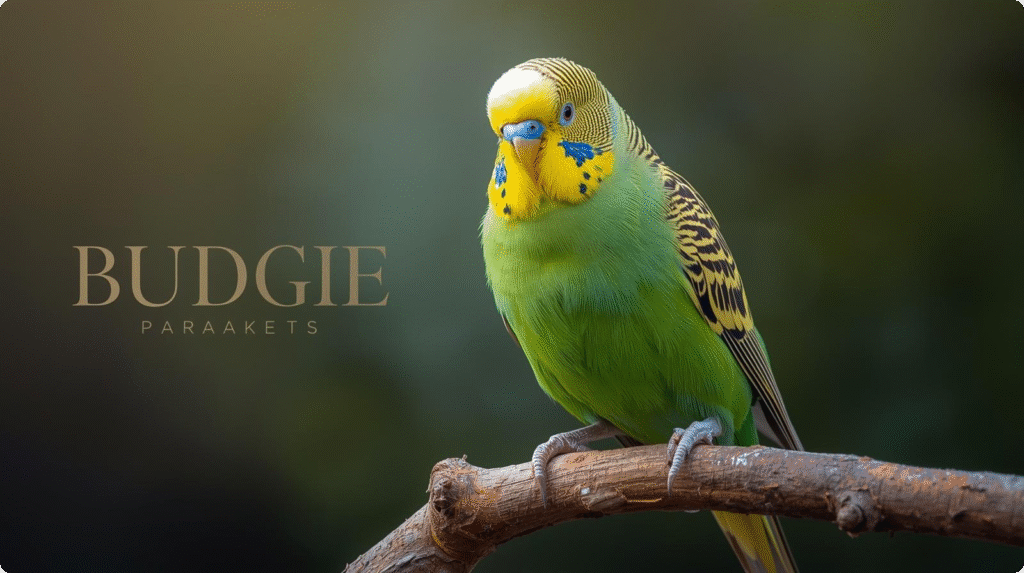
One of the most charming things about the english budgie parakeet is its puffy look. Unlike their slimmer American cousins, English budgies have a fuller, stronger body shape. This gives them an almost teddy bear-like quality.
This special look comes from several features:
Physical Features That Create the Fluffy Look
The english budgie parakeet has lots of feathers around the face and head. This creates what many people call a “fluffy” or “pompous” look.
The feathers around their cere are extra thick. The cere is the fleshy area above the beak. Sometimes these feathers even hide the beak. This thick facial feathering gives them a dignified look that many bird lovers find adorable.
Their broader chest and shoulders add to their stocky look. This makes them appear more solid than American budgies, even though they’re only slightly longer.
The english budgie parakeet also has larger spots on the throat. These spots are clearer and bigger than those on American varieties.
People call these throat spots. Show birds typically have six of them. Judges consider them an important feature.
The “Bossy” Head Position
Another special feature of the english budgie parakeet is how they hold their head. English budgies often sit with a more horizontal position when perching. They position their heads in a way that looks commanding.
This has earned them the cute nickname of looking “bossy” or dignified. Their larger head size, combined with all those feathers, creates a profile that’s clearly different from other budgie types.
They’re Social Birds with Big Personalities
People know the English budgie parakeet for its social nature and fun personality. These birds are natural flock animals in the wild. This social trait makes them great as pets.
However, the English variety tends to be a bit calmer than the more energetic American budgie.
Bonding and Friendship
English budgies form strong bonds with their human families. They can become deeply attached to the people they live with. They love interaction and attention. This makes them excellent companions for people who can spend time with them.
Many english budgie parakeet owners say their birds show clear favorites among family members. Some birds even show signs of jealousy when their favorite person pays attention to others.
These birds talk through various chirps, tweets, and body language. While they may not be as loud as some American budgies, the english budgie parakeet still has plenty to say. They will often “chat” with their owners throughout the day.
Some English budgies can learn to copy words and phrases. However, they’re generally not as talkative as some other parrot species.
Individual Personality Traits
Each english budgie parakeet has its own unique personality.
Some are bold and adventurous. They’re eager to explore new toys and spaces. Others are more careful and prefer familiar surroundings.
Some English budgies are cuddly and enjoy being held. Others prefer to interact while keeping a bit more personal space.
This personality variety means you should spend time with individual birds before choosing one. The bird’s temperament should match your lifestyle. Good breeders can often tell you about their birds’ personalities. This helps match the right english budgie parakeet with the right home.
English Budgies Come in Amazing Colors
Wild budgerigars are mostly green with yellow faces. But breeders have created english budgie parakeets in a stunning variety of colors and patterns. The color options available in English budgies are truly amazing. There’s something for everyone’s taste.
Primary Color Types
The english budgie parakeet comes in many color types, including:
- Blue series: Sky blue, cobalt blue, mauve, and violet
- Green series: Light green, dark green, olive green, and grey-green
- Yellow/white base: Lutino (yellow with red eyes), albino (pure white with red eyes)
- Grey: Various shades of grey
- Violet: A striking purple color that breeders highly prize
Pattern Types
Beyond solid colors, the english budgie parakeet shows various pattern types that add even more visual interest:
Opaline: This pattern softens the wing markings. It creates a more blended look on the back and wings. Opaline English budgies have less barring between the shoulders. This creates a clearer, more uniform color patch.
Spangle: Spangle budgies have reversed wing markings. The centers of the feathers are light and the edges are dark. This creates a special scalloped look.
Pied: Pied patterns create random patches of color. Some areas lack the normal markings entirely. This creates a unique, paint-splattered look.
Clearwing: These birds have very light wing markings. This creates a delicate, pastel look.
The amazing color variety of the english budgie parakeet makes choosing one an exciting challenge. Many bird lovers keep multiple birds in different colors to create a visually stunning flock.
They’re Surprisingly Smart Problem Solvers
Don’t let their small size fool you. The english budgie parakeet has impressive thinking abilities. These continue to surprise researchers and owners alike.
These birds show problem-solving skills, memory, and learning abilities that match many larger parrot species.
Thinking Abilities
Research shows that budgerigars understand that objects still exist even when out of sight. This is called object permanence. It’s a thinking milestone linked with higher intelligence.
The english budgie parakeet can learn to link specific sounds or words with objects, actions, or people. This shows they understand symbols.
These birds can also learn by watching. They watch other birds or their human companions and copy behaviors. This social learning ability is a sign of smart species. It helps explain why budgies can learn various tricks and behaviors.
Training and Mental Exercise
The english budgie parakeet responds well to positive training methods. They can learn many tricks and behaviors.
With patience and regular practice, owners can teach their English budgies to:
- Step up onto a finger or hand when asked
- Return to their cage when called
- Navigate obstacle courses
- Play with puzzle toys
- Do simple tricks like waving or turning around
Mental exercise is crucial for the english budgie parakeet. Without enough mental activity, these smart birds can become bored. This can lead to problems like feather plucking or too much screaming.
Giving English budgies different toys, changing them often, and spending time teaching new behaviors keeps them happy and engaged.
English Budgies Need Specific Care
All budgies have similar basic care needs. However, the English budgie parakeet has some specific needs that are different from American budgies. Understanding these differences is important for giving them the best care.
Housing Needs
Because of their larger size and slightly calmer nature, the english budgie parakeet needs the right-sized housing.
While they don’t need much larger cages than American budgies, giving them extra space helps. A minimum cage size is 24 inches wide by 18 inches deep by 24 inches tall for one English budgie. Larger is better.
The cage bar spacing should be no more than half an inch. This prevents the bird from getting its head stuck between bars. Horizontal bars are better because they give more climbing opportunities.
The english budgie parakeet likes having multiple perches at different heights and widths. This exercises their feet and prevents pressure sores.
Diet Needs
The english budgie parakeet needs a balanced diet. This includes high-quality pellets, fresh vegetables, and a limited amount of seeds.
While people often market seeds as budgie food, they should be no more than 10-20% of the diet. Seeds are high in fat and can lead to obesity, especially in the less active English variety.
You should offer fresh vegetables daily. These can include:
- Leafy greens like kale, spinach, and romaine lettuce
- Carrots (shredded or diced)
- Broccoli
- Bell peppers
- Cucumber
- Zucchini
You can offer some fruits as treats. These include apple slices, berries, and melon.
Fresh, clean water should always be available. Clean food and water dishes daily to prevent bacteria growth.
Exercise Needs
The English budgie parakeet is usually calmer than American budgies. However, they still need daily time outside the cage for exercise.
At least 2-3 hours of supervised flight time in a bird-safe room helps keep them healthy. It also gives mental exercise.
English budgies may be happy to perch and watch their surroundings more than American budgies. But they still benefit from chances to stretch their wings and explore.
They Live Relatively Long for Small Birds
The english budgie parakeet can be a long-term companion. Their lifespan often surprises new bird owners. With proper care, these birds can live much longer than many other small pets.
Expected Lifespan
In the best conditions, an english budgie parakeet can live between 7 to 15 years. Some individuals reach their late teens.
This is slightly shorter than the lifespan of American budgies. American budgies can live 10-15 years or sometimes longer.
The difference comes from selective breeding for show features. This can sometimes affect overall health and strength.
What Affects How Long They Live
Several things influence how long an english budgie parakeet will live:
Genetics: Birds from good breeders who care about health tend to live longer. These breeders focus on health alongside show features.
Diet: Proper food is perhaps the most important factor in longevity. An english budgie parakeet fed a balanced diet will generally outlive one fed only seeds.
Vet care: Regular check-ups with a bird vet can catch health problems early. Veterinarians recommend annual wellness exams for all English budgie parakeets.
Exercise: Enough physical activity helps maintain heart health, muscle tone, and healthy weight. All of these help them live longer.
Environment: A stress-free environment with the right temperature, humidity, and lighting supports overall health.
Social interaction: Mental and emotional wellbeing greatly affects physical health. An english budgie parakeet that gets enough social interaction typically lives longer than a neglected or isolated bird.
English Budgies Are Exhibition Champions
People specifically bred the english budgie parakeet for competitive showing. This heritage remains an important part of the breed today.
Understanding the show world helps explain why English budgies look the way they do. It also explains why people prize certain features.
Show Standards
People hold budgerigar shows worldwide. Organizations like the Budgerigar Society establish breed standards.
Judges evaluate the english budgie parakeet on many criteria, including:
- Size and shape: Larger, stronger birds with good proportions score higher
- Head quality: A large, round head with prominent facial features is preferred
- Spots: Six large, round, evenly spaced throat spots are ideal
- Color: Rich, even color without fading or patches
- Posture: A confident, upright posture at about 45 degrees from the perch
- Condition: Overall health, cleanliness, and feather quality
- Behavior: The bird’s behavior and composure during judging
The Showing Community
The english budgie parakeet show community is a passionate group of breeders and lovers. They’re dedicated to preserving and improving the breed.
Shows give breeders chances to compare their birds against breed standards. They gain recognition for exceptional birds and network with other lovers.
For owners not interested in competitive showing, understanding these standards can still help. Birds bred by show breeders are often healthier and better socialized. This is true even if they don’t meet show standards perfectly.
The Difference Between Show and Pet Quality
Not every english budgie parakeet is show quality. That’s perfectly fine for pet owners.
Show-quality birds have specific features that judges look for. Pet-quality birds may have minor “faults” that prevent them from winning competitions. But these make no difference in their quality as companions.
Common reasons an english budgie parakeet might be pet quality rather than show quality include:
- Slightly smaller size
- Less prominent head or facial feathering
- Irregular spot pattern
- Minor color imperfections
- Less ideal posture
These minor differences don’t affect the bird’s health, personality, or suitability as a pet. Pet-quality english budgie parakeets are often available at lower prices than show specimens.
Comparison: English Budgie Parakeet vs. American Budgie
| Feature | English Budgie | American Budgie |
|---|---|---|
| Size | 8-9 inches long | 6-7 inches long |
| Body Shape | Robust, stocky, fuller look | Slender, sleeker profile |
| Head Size | Larger, rounder with thick feathering | Smaller, more proportional |
| Feather Texture | Fuller, fluffier, especially on face | Sleeker, more streamlined |
| Activity Level | Moderate, more relaxed | High energy, very active |
| Talking Ability | Good, but quieter | Excellent, more vocal |
| Lifespan | 7-15 years (average 8-10) | 10-15 years (average 12-14) |
| Price Range | $75-$150+ (show quality more) | $15-$50 |
| Where to Find | Less common, specialized breeders | Widely available in pet stores |
| Purpose | Bred for shows and companionship | Bred mainly for pet trade |
| Health Issues | More prone to breathing issues | Generally robust, fewer issues |
| Personality | Calmer, more laid-back | More energetic, playful |
Health Considerations for English Budgie Parakeets
The English budgie parakeet is a strong bird. However, potential owners should know about some health issues.
Common Health Issues
Breathing Problems: The thick facial feathering of the english budgie parakeet can sometimes interfere with breathing. This especially affects birds with extremely developed features.
Make sure the air quality is good. Avoid things that irritate breathing like aerosol sprays, scented candles, and non-stick cookware.
Obesity: English budgies are less active than American varieties. They can easily become overweight if overfed or given too many fatty seeds.
Watch their weight and give them enough exercise.
Tumors: Like all budgies, the english budgie parakeet can develop tumors, especially as they age. Regular vet check-ups help catch these early.
Scaly Face Mites: These tiny parasites can affect any budgie. They cause crusty growths around the beak, eyes, and legs. Treatment is simple when caught early.
Psittacosis: This bacterial infection can affect all parrots, including the english budgie parakeet. Symptoms include breathing problems, tiredness, and discharge from the eyes or nose.
It’s treatable with antibiotics but can spread to humans. So vet care is essential.
Preventive Care
– Regular vet check-ups are important.
– A balanced diet is essential.
– Clean living conditions help keep your budgie healthy.
– Lots of exercise is necessary for a healthy English budgie parakeet.
Owners should watch their bird’s behavior and appearance closely. Budgies naturally hide signs of illness. Changes in eating habits, activity level, droppings, or sounds can mean health problems that need vet attention.
Setting Up the Perfect Home for Your English Budgie Parakeet
Creating an ideal environment for your english budgie parakeet involves more than just buying a cage. Here’s what you need to know:
Essential Equipment
Cage: Choose a cage with the right size and bar spacing. Powder-coated or stainless steel cages are better than galvanized cages. Galvanized cages can contain toxic zinc.
Perches: Give them natural wood perches of different widths. This exercises their feet and prevents arthritis. Avoid sandpaper-covered perches. These can damage foot pads.
Food and water dishes: Stainless steel dishes are easiest to clean and most sanitary. Place them away from perches to prevent droppings from getting in them.
Toys: The english budgie parakeet needs mental exercise. Give them various toys including shreddable toys, foraging toys, bells, and mirrors.
Note: Some experts recommend limiting mirror exposure. It can lead to behavioral issues.
Cuttlebone or mineral block: These provide essential calcium and help keep the beak trimmed.
Location Tips
Place your english budgie parakeet‘s cage in a room where the family spends time. These social birds want to feel included in household activities.
However, don’t place the cage in the kitchen. Cooking fumes can be harmful.
Position the cage at about eye level. Birds feel more secure when they’re not looking up at everyone.
Make sure the location has natural light but isn’t in direct sunlight. Direct sunlight can cause overheating. The room should be draft-free and maintain a comfortable temperature between 65-85°F. Cover the cage at night to provide 10-12 hours of darkness. This is important for the bird’s sleep rhythm and overall health.
Frequently Asked Questions About English Budgie Parakeets
What is the main difference between an english budgie parakeet and a regular budgie?
The english budgie parakeet is larger and stronger than the American (regular) budgie. English budgies typically measure 8-9 inches compared to 6-7 inches for American budgies.
English budgies have fuller feathering, especially around the face. This creates a distinctive “puffy” look. They also have larger, more visible throat spots and a more horizontal, commanding posture.
People bred English budgies specifically for bird shows. They tend to have a calmer temperament than the more energetic American variety.
Can english budgie parakeets learn to talk?
Yes, english budgie parakeets can learn to talk and copy sounds. However, they’re generally not as vocal or talkative as American budgies.
Male English budgies typically talk better than females. With patience and regular interaction, many English budgies can learn 10-20 words or short phrases.
However, not all birds will talk. Talking ability shouldn’t be the main reason for choosing an english budgie parakeet as a pet. Their charming personalities and social nature make them wonderful companions whether they talk or not.
How much does an english budgie parakeet cost?
The cost of an english budgie parakeet typically ranges from $75 to $150 for a pet-quality bird. Show-quality birds cost much more, sometimes $200-$500 or more.
The price depends on things like color rarity, lineage, breeder reputation, and whether the bird meets show standards. This is much more expensive than American budgies, which typically cost $15-$50.
You should also budget for cage setup ($100-$300), ongoing food and supplies ($20-$30 monthly), and vet care (annual checkups typically $50-$100).
Do english budgie parakeets need a companion bird?
English budgie parakeets are social birds that can benefit from having a companion. However, they don’t absolutely need one if their human family gives them enough interaction and attention.
A single English budgie that gets several hours of daily interaction can be perfectly happy.
If you often stay away from home or can’t interact with your budgie daily, think about getting two English budgies. When keeping multiple birds, make sure they’re compatible. Also make sure the cage is large enough for both birds.
Some english budgie parakeets bond so strongly with their bird companions that they become less interested in human interaction.
Are english budgie parakeets good pets for beginners?
Yes, english budgie parakeets can make excellent pets for beginners. However, they do need more commitment than their reputation as “easy” birds might suggest.
They’re generally calmer and easier to handle than American budgies. This makes them good for people new to bird ownership.
However, all budgies need daily interaction, cage cleaning, a proper diet, and vet care. English budgies need proper care to stay healthy. So beginners should learn thoroughly before bringing one home.
With proper research and commitment, an english budgie parakeet can be a wonderful first bird. It can provide years of companionship.
How often should I take my english budgie parakeet to the veterinarian?
Take your english budgie parakeet for a wellness exam shortly after you get it. This establishes baseline health and catches any existing problems.
After that, veterinarians recommend annual wellness exams for young, healthy birds. As your English budgie ages (typically after 5-7 years), twice-yearly checkups become advisable. This catches age-related issues early.
You should also seek vet care right away if you notice any signs of illness. These include changes in eating, droppings, activity level, or breathing.
Find a bird vet before you need one. Not all vets have experience with birds.
What colors are available in english budgie parakeets?
The english budgie parakeet comes in an impressive array of colors and patterns. This is thanks to decades of selective breeding.
Base colors include different shades of blue, like sky blue and cobalt. They also include green shades, such as light green and dark green. Other colors are grey, yellow (lutino), and white (albino).
These base colors can combine with patterns like:
- Opaline (softened wing markings)
- Spangle (reversed feather colors)
- Pied (random color patches)
- Clearwing (very light wing markings)
Some colors are rarer and more valuable than others. Violet is particularly prized. The color variety means there’s an english budgie parakeet to suit virtually any taste.
Can english budgie parakeets live with other bird species?
Generally, experts do not recommend housing English budgie parakeets with other bird species. Budgies have specific social behaviors and ways of communicating. These don’t always work well with other species.
Size differences can also create safety concerns. Larger birds might injure or scare the budgie. Meanwhile, the budgie’s beak could harm smaller finches or canaries.
Also, different species have different food needs. This makes shared feeding difficult.
If you want multiple bird species, careful research and supervision are essential. For most pet owners, keeping English budgie parakeets alone or with other budgies is the safest and best way.
Conclusion
The english budgie parakeet is truly a remarkable bird. It offers a unique mix of beauty, intelligence, and companionship. People love these birds worldwide for their fluffy appearance and bright colors. They also have fun personalities and smart thinking skills.
Understanding what makes the english budgie parakeet special helps potential owners make informed decisions. These birds require commitment in terms of time, attention, and proper care. But the rewards of sharing your life with an English budgie are immeasurable.
Their gentle temperament makes them excellent for families. Their intelligence provides endless fun and bonding opportunities.
If you love the English budgie parakeet for its looks or want a friendly pet, here are seven fun facts. They will help you appreciate what makes these birds special.
With good care, an English budgie parakeet can be a cherished family member. It can stay with you for many years.
If you’re considering adding an english budgie parakeet to your home, take time to find a good breeder. Prepare an appropriate living environment and learn about their care needs. Investing time and effort will repay you many times over.
You’ll enjoy the companionship these wonderful birds provide. The English budgie parakeet is small, but it has a big personality. It is charming and can brighten your days with its chirps, playfulness, and affection.
Leave a Reply