




Have you ever been mesmerized by the stunning beauty of a blue and white parakeet? These gorgeous birds are among the most visually striking color variations in the parakeet world.
The blue and white parakeet has bright white feathers and bold blue markings. This makes it look elegant and eye-catching. In this guide, we will share seven fun facts about blue and white parakeets. These facts will help you appreciate these beautiful birds even more.
Whether you’re thinking about bringing a blue and white parakeet into your home or you’re simply fascinated by these charming creatures, understanding what makes them unique will enhance your appreciation for them. From their distinctive color patterns to their delightful personalities, these birds offer something truly special. Let’s dive into the wonderful world of blue and white parakeets and discover what sets them apart.
Understanding the Blue and White Parakeet
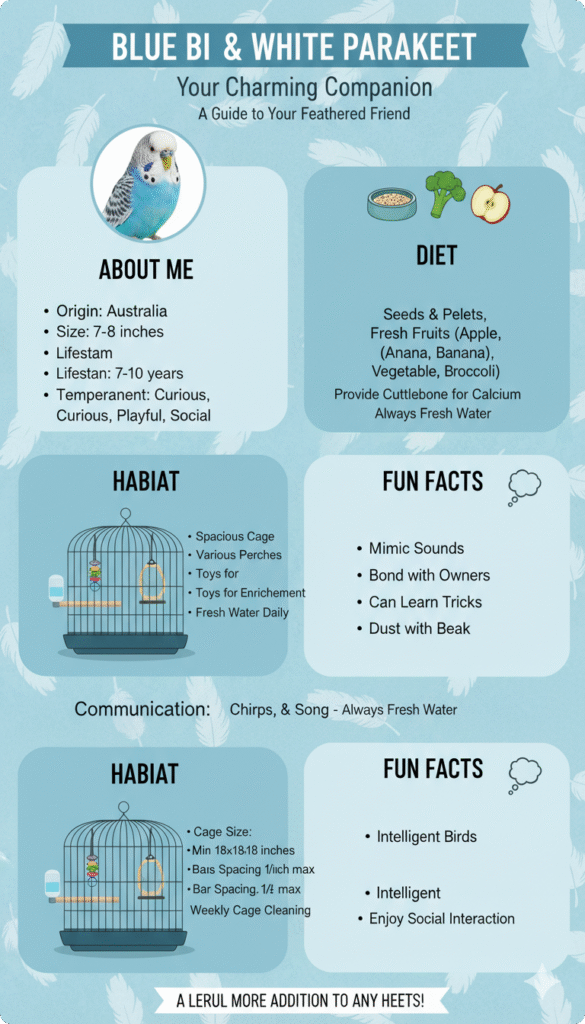
Before we explore our fun facts, let’s clarify what a blue and white parakeet actually is. These birds are color mutations of the common budgerigar, the small parrots most people know as parakeets. In the wild, budgerigars are predominantly green with yellow faces and black wing markings.
The blue and white parakeet is a result of specific genetic mutations that affect feather pigmentation. Several different mutations can create blue and white coloring, including:
Common Blue and White Varieties
Albino: Pure white body with red eyes. These birds lack all color pigmentation except for slight blue tints on the tail and wings.
Recessive Pied: Random patches of white and blue creating a paint-splattered appearance. Each bird has a unique pattern.
Dominant Pied: Similar to recessive pied but with different genetic inheritance. The white patches are often more evenly distributed.
Clearwing: White or very pale body with light blue wing markings. The wings appear almost translucent.
White-based blue: Birds with blue markings on a predominantly white background, often with some grey or blue chest feathers.
Each type of blue and white parakeet has its own unique beauty and charm. The exact appearance depends on which genetic mutations are present.
Blue and White Parakeets Are the Result of Multiple Genetic Mutations
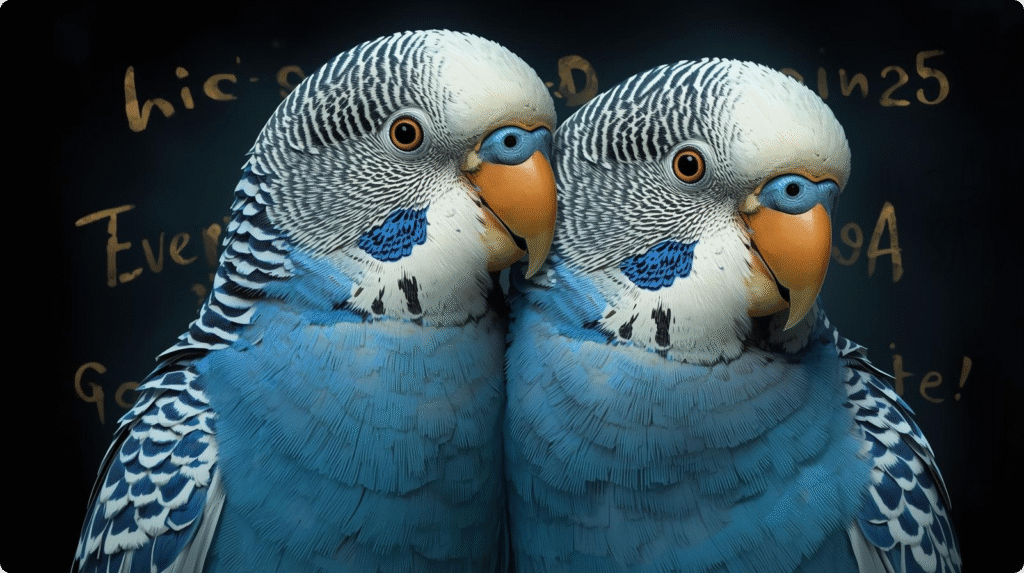
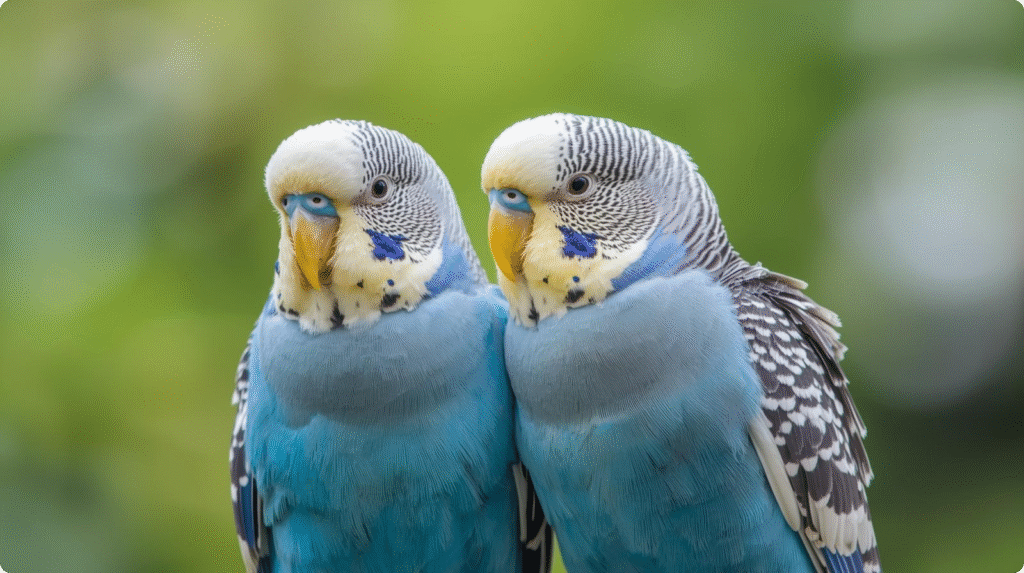
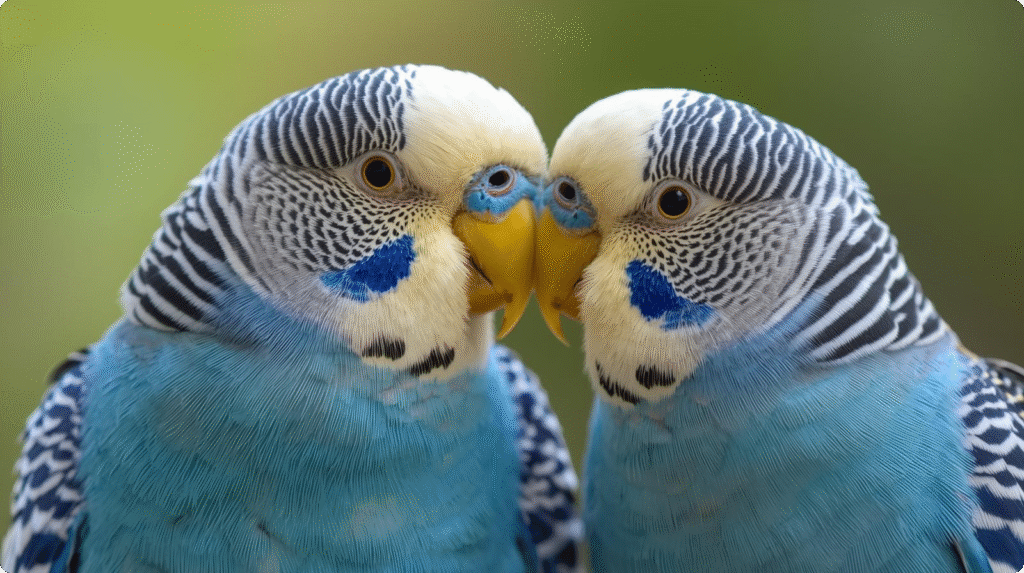
One of the most interesting things about the blue and white parakeet is their unique genetics. Understanding these genetics helps explain why no two pied parakeets look exactly alike.
The Science Behind the Colors
The blue and white parakeet gets its coloring through a combination of genetic factors:
Blue mutation: This removes yellow pigment from feathers. Since green in parakeets comes from blue structure plus yellow pigment, removing yellow leaves only blue.
White mutation: Several different mutations can create white feathers. Some remove all pigmentation, while others create patches of unpigmented feathers.
Pied factor: This mutation creates random patches of normal coloring mixed with white areas. The distribution is unique to each bird.
Why Each Bird Looks Different
If you’ve seen multiple blue and white parakeets, you’ve probably noticed that each one has a unique pattern. This happens because:
Random distribution: In pied mutations, the white patches appear randomly. There’s no way to predict exactly where they’ll be.
Variable expression: Even birds with the same genetic mutations can look different because genes express themselves with varying intensity.
Multiple factors: When several mutations combine, the possibilities multiply. A blue and white parakeet might have pied, clearwing, and other factors all working together.
Inheritance patterns: Baby parakeets inherit genetic information from both parents. This creates endless combinations and variations.
This genetic diversity means your blue and white parakeet is truly one-of-a-kind. No other bird will have exactly the same pattern.
Breeding Blue and White Parakeets
Breeders who want to produce blue and white parakeets must understand genetics carefully:
Recessive traits: Some mutations only appear when a bird inherits the gene from both parents. This makes certain colors harder to produce.
Dominant traits: Other mutations appear even if inherited from just one parent. These are easier to reproduce.
Split birds: Some parakeets carry hidden genes they don’t display. These “split” birds can produce unexpected colors in their babies.
**Predictability:**
Breeders can predict general outcomes. However, the exact appearance of a pied blue and white parakeet is a surprise. This surprise lasts until the bird matures.
They Have the Same Wonderful Personality as Other Parakeets
Many people wonder if a blue and white parakeet behaves differently than other color varieties. The good news is that color doesn’t affect personality. Your blue and white parakeet will have the same delightful traits as any other budgie.
Typical Parakeet Personality Traits
The blue and white parakeet exhibits all the charming behaviors that make budgies such popular pets:
Playful nature: These birds love toys, games, and exploration. A blue and white parakeet will spend hours playing with bells, mirrors, swings, and ladders.
Social butterflies: Parakeets are flock animals that crave interaction. Your blue and white parakeet will enjoy spending time with you and may follow you around the house during out-of-cage time.
Curious explorers: Everything is interesting to a parakeet. A blue and white parakeet will investigate new objects, sounds, and people with great enthusiasm.
Gentle temperament: Most parakeets are gentle birds that rarely bite hard. Even when they do nip, it’s usually gentle and more surprising than painful.
Active energy: These little birds are constantly moving. A blue and white parakeet hops, climbs, flies, and plays throughout the day.
Individual Personality Differences
While all blue and white parakeets share basic parakeet traits, each bird has individual quirks:
Boldness levels: Some parakeets are brave explorers, while others are more cautious. Your blue and white parakeet might be outgoing or shy.
Affection preferences: Some birds love to cuddle and be petted. Others prefer to interact while maintaining personal space.
Vocalization: All parakeets chirp, but some are chattier than others. Your blue and white parakeet might be very talkative or relatively quiet.
Activity levels: Energy varies between individuals. Some blue and white parakeets are high-energy acrobats, while others are more laid-back.
Learning speed: Some birds pick up tricks and words quickly. Others take more time or show less interest in training.
How to Bring Out the Best Personality
Help your blue and white parakeet develop a wonderful personality through proper care:
- Start socialization young for best results
- Handle your bird gently and regularly
- Speak to your blue and white parakeet frequently in a soft, friendly tone
- Provide mental stimulation through toys and training
- Respect your bird’s boundaries and body language
- Be patient with shy birds, giving them time to trust
- Reward good behavior with treats and praise
Blue and White Parakeets Can Learn to Talk
One of the best surprises for new parakeet owners is finding out that their blue and white parakeet can talk. While not all birds develop this skill, many parakeets become quite chatty.
Talking Ability in Parakeets
The blue and white parakeet has the same talking potential as any other budgie color:
Male advantage: Male parakeets are generally better talkers than females. If talking is important to you, consider getting a male blue and white parakeet.
Vocabulary size: Many parakeets learn 20-50 words. Some exceptional birds learn over 100 words and phrases.
Clarity: Parakeet voices are high-pitched and can be hard to understand at first. With practice, you’ll learn to recognize what your blue and white parakeet is saying.
Context use: Smart parakeets learn to use words appropriately. Your blue and white parakeet might say “hello” when you enter the room or “night night” at bedtime.
Mimicry: Beyond words, these birds copy sounds like phone rings, whistles, other pets, and household noises.
How to Teach Your Blue and White Parakeet to Talk
Encourage your blue and white parakeet to develop talking skills:
Start early: Young birds learn faster than older ones. Begin training when your bird is 3-4 months old for best results.
Repetition: Say the same word or phrase many times. Use it consistently in the same context.
Clear pronunciation: Speak slowly and clearly so your blue and white parakeet can hear the word properly.
Short sessions: Practice for 10-15 minutes several times daily rather than one long session.
Positive association: Say words during pleasant activities. For example, say “treat” when offering a favorite food.
Be patient: Some birds learn in weeks, others take months. Don’t give up if your blue and white parakeet doesn’t talk immediately.
Record yourself: Playing recordings of your voice can provide extra practice when you’re not home.
Not All Parakeets Talk
Remember that talking ability varies greatly between individual birds. Some blue and white parakeets never learn to talk, and that’s perfectly normal. A bird that doesn’t talk can still be an amazing, affectionate companion.
If your blue and white parakeet doesn’t talk, focus on other ways to communicate and bond. Many non-talking birds are excellent at learning tricks, playing games, and showing affection in other ways.
Their Unique Coloring Requires No Special Care
You might wonder if a blue and white parakeet needs different care than standard green and yellow budgies. The great news is that these beautiful birds have the same care requirements as any other parakeet.
Basic Care Requirements
Your blue and white parakeet needs:
Appropriate housing: A cage at least 18 inches wide by 18 inches deep by 18 inches tall for one bird. Bigger is always better.
Proper diet: High-quality pellets, fresh vegetables, and limited seeds. A varied diet keeps your blue and white parakeet healthy.
Fresh water: Clean water daily, changed more often in hot weather or if soiled.
Exercise: Daily out-of-cage time for flying and exploring. At least 2-3 hours of supervised freedom.
Mental stimulation: Toys, training, and social interaction. A bored blue and white parakeet can develop behavioral problems.
Cleanliness: Daily spot cleaning and weekly deep cleaning of the cage.
Temperature: Comfortable room temperature between 65-80°F. Avoid drafts and extreme heat.
Diet for Healthy Feathers
While the blue and white parakeet doesn’t need special food, proper nutrition helps maintain their beautiful feathers:
Pellets (60-70% of diet): Provide complete nutrition in every bite. Choose high-quality brands specifically made for parakeets.
Vegetables (20-30% of diet): Offer daily fresh veggies like:
- Leafy greens (kale, spinach, romaine)
- Carrots
- Broccoli
- Bell peppers
- Cucumber
- Peas
Fruits (5-10% of diet): Small amounts as treats:
- Apples (no seeds)
- Berries
- Melon
- Grapes
Seeds (occasional treats): While marketed as parakeet food, seeds should be treats only. They’re too high in fat for daily feeding.
Avoid toxic foods: Never give your blue and white parakeet avocado, chocolate, caffeine, alcohol, or high-salt foods.
Grooming and Maintenance
The blue and white parakeet needs basic grooming:
Nail trims: Every 6-8 weeks as needed. Overgrown nails can cause injury.
Beak care: Usually self-maintaining through chewing. Provide cuttlebone for natural trimming.
Bathing: Offer a shallow dish of water 2-3 times weekly. Some birds prefer misting with a spray bottle.
Feather care: Healthy diet and proper humidity keep feathers in good condition. No special products needed.
Blue and White Parakeets Can Live 10-15 Years
Many people are surprised to learn that a blue and white parakeet can be a long-term companion. With proper care, these birds often live over a decade.
Expected Lifespan
The blue and white parakeet typically lives:
Average lifespan: 10-15 years in captivity with good care
Shorter lifespans: 5-8 years with poor diet, inadequate care, or genetic issues
Longer lifespans: Some parakeets live 15-20 years with exceptional care
This longevity means getting a blue and white parakeet is a serious commitment. You’ll be caring for this bird for potentially 10-15 years.
Factors Affecting Lifespan
Several factors influence how long your blue and white parakeet will live:
Diet quality: Proper nutrition is the single most important factor. A balanced diet dramatically extends lifespan compared to seed-only diets.
Exercise: Regular flight and activity maintain cardiovascular health and muscle tone. An active blue and white parakeet typically lives longer.
Veterinary care: Annual check-ups catch problems early. Finding an avian vet before you need one is crucial.
Genetics: Some birds inherit better health than others. Choosing a reputable breeder helps ensure good genetics.
Environment: Clean, safe housing at proper temperature reduces stress and disease risk.
A happy blue and white parakeet that gets enough social interaction usually lives longer. In contrast, a neglected and sad bird does not.
Accidents: Many parakeet deaths result from preventable accidents. Bird-proofing and supervision are essential.
Maximizing Your Parakeet’s Lifespan
Help your blue and white parakeet live a long, healthy life:
- Feed a varied, nutritious diet
- Provide daily exercise opportunities
- Schedule annual vet check-ups
- Keep the environment clean and safe
- Maintain appropriate temperature and humidity
- Offer mental stimulation through toys and training
- Monitor for signs of illness and address them immediately
- Avoid exposure to toxic fumes (candles, non-stick cookware, aerosols)
- Supervise interactions with other pets
- Bird-proof areas before allowing out-of-cage time
Age-Related Changes
As your blue and white parakeet ages, you may notice changes:
Reduced activity: Older birds may fly and play less than youngsters.
Sleep needs: Senior parakeets often sleep more.
Dietary changes: Some older birds need softer foods or adjusted portions.
### Health Issues
Senior blue and white parakeets can have health problems as they age. They may develop arthritis or cataracts. Other age-related issues can also occur.
With appropriate care adjustments, your aging blue and white parakeet can enjoy comfortable golden years.
They’re Perfect for Apartments and Small Spaces
The blue and white parakeet makes an excellent pet for people living in apartments or homes with limited space. Their small size and moderate noise level work well in close quarters.
Size Advantages
The compact size of a blue and white parakeet offers several benefits:
Small cage size: You want the biggest cage you can get. However, a roomy parakeet cage needs less floor space than cages for bigger pets.
Easy transport: Moving your blue and white parakeet to different rooms or taking them to the vet is simple with their manageable cage size.
Less intimidating: Small size makes parakeets less scary for children or people nervous around birds.
Lower food costs: A blue and white parakeet eats much less than larger parrots, keeping ongoing costs manageable.
Noise Considerations
While no bird is silent, the blue and white parakeet is quieter than many alternatives:
Moderate volume: Parakeet chirps are much softer than the screams of large parrots like cockatoos or macaws.
Pleasant sounds: Most people find parakeet chirping cheerful rather than annoying.
Manageable calling: While a blue and white parakeet will call in the morning and evening, it’s not usually excessive.
Training helps: You can train your bird to be quieter during certain times using positive reinforcement.
Making It Work in Small Spaces
Maximize success with your blue and white parakeet in limited space:
Strategic cage placement: Position the cage where your bird can see household activity without being in high-traffic areas.
Vertical space: Use tall cages to maximize space efficiency.
Foldable playgyms: Set up and store play areas as needed.
Rotate toys: Keep a toy collection but only put a few in the cage at once. This saves space while maintaining variety.Designated bird areas: Create specific zones for your blue and white parakeet to avoid spreading supplies throughout your home
Neighbor Considerations
If you live in an apartment, consider neighbors when keeping a blue and white parakeet:
- Establish quiet hours
- Train for reduced calling
- Place cages away from shared walls when possible
- Inform neighbors about your pet
- Address excessive noise promptly
Most neighbors won’t mind a blue and white parakeet because they’re relatively quiet compared to other pets like barking dogs.
Blue and White Parakeets Are More Affordable Than Rare Color Mutations
The blue and white parakeet is beautiful and unique. However, they are usually cheaper than some rare color mutations. This makes them accessible to more bird lovers.
Price Ranges
The cost of a blue and white parakeet varies based on several factors:
Standard pricing: $30-$80 for most blue and white varieties
Rare patterns: Particularly striking pied patterns might cost $80-$150
Show quality: Birds meeting show standards cost more, sometimes $100-$200
Location: Prices vary by region and availability
Breeder reputation: Well-known breeders with healthy, socialized birds charge higher prices
Comparison with Other Mutations
The blue and white parakeet is typically more affordable than:
- Rainbow parakeets ($100-$200)
- Spangle combinations ($80-$150)
- Rare violet varieties ($150-$300)
- Certain crested mutations ($100-$250)
However, blue and white parakeets usually cost more than:
- Standard green and yellow birds ($15-$40)
- Solid blue or yellow birds ($25-$50)
Beyond Purchase Price
Remember that the initial cost of your blue and white parakeet is just the beginning. Budget for:
Cage and accessories: $100-$300 for a good setup.
Food: $20-$30 each month.
Toys: $10-$30 each month.
Veterinary care: $100-$300 each year for check-ups.
Emergency vet visits: $200-$500+ when needed.
Unexpected expenses: Cage repairs, replacement supplies, and more.
The ongoing costs of keeping a blue and white parakeet far exceed the purchase price over the bird’s 10-15 year lifespan.
Getting Good Value
Make sure you get a healthy blue and white parakeet for your money:
Buy from reputable sources: Choose experienced breeders or responsible pet stores over backyard breeders.
Health guarantee: Good breeders offer health guarantees and will answer questions.
Birds should fully wean before going home, typically at 8-10 weeks old.
Socialization: Well-handled babies adjust better to home life than parent-raised birds.
Health signs: Look for bright eyes, clean nostrils, smooth feathers, and active behavior.
A healthy, friendly blue and white parakeet is worth spending a little more on. This is better than buying a cheaper bird that may have health or behavior problems.
Comparison: Blue and White Parakeet vs. Other Color Varieties
Comparison: Blue and White Parakeet vs. Other Color Varieties
| Parakeet Type | Appearance | Pattern Variety | Price Range | Availability | Personality | Care Requirements | Talking Ability | Lifespan | Show Potential | Eye Color | Special Needs |
|---|---|---|---|---|---|---|---|---|---|---|---|
| Blue and White Parakeet | Blue markings on white background | Each bird unique (if pied) | $30-$150 | Moderate | Same as all parakeets | Standard parakeet care | Same potential | 10-15 years | Good if well-marked | Usually dark | None |
| Green and Yellow | Green body, yellow face | Consistent pattern | $15-$40 | Very common | Same as all parakeets | Standard parakeet care | Same potential | 10-15 years | Less popular | Usually dark | None |
| Solid Blue | Solid blue body | Consistent coloring | $25-$60 | Common | Same as all parakeets | Standard parakeet care | Same potential | 10-15 years | Good | Usually dark | None |
| Albino | Pure white, red eyes | No pattern variation | $50-$100 | Less common | Same as all parakeets | Standard parakeet care | Same potential | 10-15 years | Good | Red/pink | Slightly more sensitive to light |
Setting Up the Perfect Home for Your Blue and White Parakeet
Creating an ideal environment helps your blue and white parakeet thrive. Here’s everything you need to know about proper setup.
Choosing the Right Cage
Your blue and white parakeet needs appropriate housing:
Minimum size: 18 x 18 x 18 inches for one bird, but bigger is always better. Consider 24 x 24 x 24 inches or larger.
Bar spacing: No more than 1/2 inch between bars to prevent escape or injury.
Bar orientation: Horizontal bars allow climbing, which parakeets love.
Material: Powder-coated or stainless steel is best. Avoid galvanized cages with zinc or lead.
Door size: Large enough for easy access and for your hand to enter comfortably.
Placement: At eye level in a family room where your blue and white parakeet can observe household activities.
Essential Accessories
Equip your cage with:
Perches:
- Natural wood branches of varying diameters
- 3-4 perches at different heights
- Avoid sandpaper perches that damage feet
Food dishes:
- At least two dishes (one for pellets, one for fresh food)
- Stainless steel is easiest to clean
- Place away from perches to prevent contamination
Water:
- Fresh water dish or bottle changed daily
- Some birds prefer dishes, others like bottles
Toys:
- 4-5 toys rotated regularly
- Include bells, mirrors, swings, and chew toys
- Avoid anything with small parts that could be swallowed
Cuttlebone: Provides calcium and helps maintain beak health
Cage liner: Paper towels or cage liners for easy cleaning
Creating a Safe Environment
Make your home safe for your blue and white parakeet:
• Cover windows with curtains during flight time
• Remove toxic plants
• Turn off ceiling fans
• Cover or remove standing water (sinks, toilets)
• Remove other pets from the area
• Avoid using non-stick cookware or aerosol sprays
• Check for small spaces where birds can get trapped
Frequently Asked Questions About Blue and White Parakeets
Are blue and white parakeets naturally occurring?
No, you cannot find the blue and white parakeet in the wild. Wild budgerigars are green and yellow.
The blue and white coloring comes from genetic mutations that breeders have selectively cultivated in captivity over many generations. Several different mutations can create blue and white appearances, including pied, albino, and clearwing varieties. These mutations can happen naturally, but they would not do well in the wild. Their bright colors make them easier for predators to see.
Do blue and white parakeets need a companion?
A blue and white parakeet can be happy either alone or with a companion, depending on the situation. A single parakeet that receives several hours of daily human interaction can thrive. However, if you’re away from home frequently, you should get two birds so they can keep each other company.
When keeping multiple parakeets together, ensure the cage is large enough (double the minimum size for two birds). Some owners prefer single birds because they often bond more closely with humans, while pairs bond primarily with each other.
What’s the difference between albino and pied blue and white parakeets?
Albino and pied blue and white parakeets look different and result from different genetic mutations. Albino parakeets are pure white with red or pink eyes and lack all melanin pigmentation. They may have slight blue tints on wings and tail. Pied parakeets have random patches of blue and white in unique patterns, with normal dark eyes.
Each pied blue and white parakeet looks different because the pattern distribution is random. Albinos look essentially identical to each other, while no two pied birds have the same markings.
Can blue and white parakeets see their own coloring?
Yes, your blue and white parakeet can see its own colors very well. In fact, parakeets see color better than humans.
They can see into the ultraviolet spectrum, which means they see colors we can’t even imagine. This enhanced color vision helps them identify potential mates, find food, and recognize other birds. We may not know if a blue and white parakeet sees its own beauty like we do. However, birds do use visual cues, like color, to interact with their surroundings and other birds.
Are blue and white parakeets harder to breed than standard colors?
Breeding blue and white parakeets can be harder than breeding green ones. This depends on the mutation you are using.
Some mutations, like dominant pied, are easy to produce. This is because the trait shows up even if it comes from just one parent. Others like recessive pied require both parents to carry the gene.
Additionally, predicting the exact pattern on pied babies is impossible even when you know the genetics. Breeders need to understand color genetics well to produce blue and white parakeets. They may have to breed several generations to get the results they want.
Do blue and white parakeets cost more to maintain than other colors?
No, the blue and white parakeet costs the same to maintain as any other parakeet color. All budgies need the same food, cage, toys, and veterinary care regardless of their appearance. The only cost difference is in the initial purchase price.
parakeets usually cost more than green birds. However, they cost less than very rare mutations. Once you bring your bird home, plan to spend $30 to $50 each month on food, toys, and supplies. You should also budget $100 to $300 each year for veterinary care, no matter what color your parakeet is.
Can you tell if a blue and white parakeet is male or female by appearance?
Yes, you can usually tell if an adult parakeet is male or female. Just look at the cere, which is the fleshy area above the beak. Adult males typically have blue or purple ceres, while adult females have brown, tan, or crusty beige ceres.
This method does not work well for young birds, albinos, or some mutations. In these cases, the cere color does not follow usual patterns.
In albino parakeets, males may have pale purple or pinkish ceres, while females have white or very pale brown. For accurate sexing of young or unusual birds, experts recommend DNA testing.
How can I tell if my blue and white parakeet is happy?
A happy blue and white parakeet shows several clear signs. Watch for singing and chirping during the day. Look for playful behavior with toys.
A good appetite is important. The feathers should be smooth and clean.
Notice if they are curious about their surroundings. Relaxed body language is a good sign.
Happy parakeets often grind their beaks when content (sounds like soft scratching), bob their heads when excited, and show interest in interacting with you. A sad parakeet sits fluffed up.
It stays quiet and shows little interest in toys or food. It may also bite too much. If you notice signs of unhappiness, evaluate whether your bird is getting enough interaction, exercise, and mental stimulation.
Conclusion
The blue and white parakeet is a special bird. It has stunning beauty and a great personality. These traits make parakeets beloved pets. These seven fun facts only scratch the surface of what makes these birds so captivating.
The blue and white parakeet has many special traits. Their interesting genetics and unique patterns attract bird lovers. They can talk and are great for apartment living.
Knowing these facts helps you appreciate the parakeet better. This is true whether you are thinking about getting one or you already have these beautiful birds in your life. While their looks are impressive, remember that their personality, intelligence, and companionship are much more important than just color.
The blue and white parakeet requires the same care and commitment as any other budgie color variety. They need daily interaction, proper nutrition, mental stimulation, and veterinary care to thrive. In return, they offer years of companionship, entertainment, and affection. With lifespans of 10-15 years, your blue and white parakeet can become a long-term family member who brings joy to your daily life.
If you’re thinking about adding a blue and white parakeet to your home, take time to prepare properly. Research the care needs of birds. Find a good breeder or adoption source. Set up a proper home for them.
Be ready to give these social birds daily attention. With the right preparation and care, a parakeet can be a very rewarding pet.
These beautiful birds prove that sometimes the most wonderful companions come in small, colorful packages. The parakeet stands out for its beautiful look.
It brings joy, laughter, and love to homes that have one. Whether you choose a parakeet for its beauty or its personality, you’re sure to find that these remarkable little birds exceed your expectations in every way.
Leave a Reply