
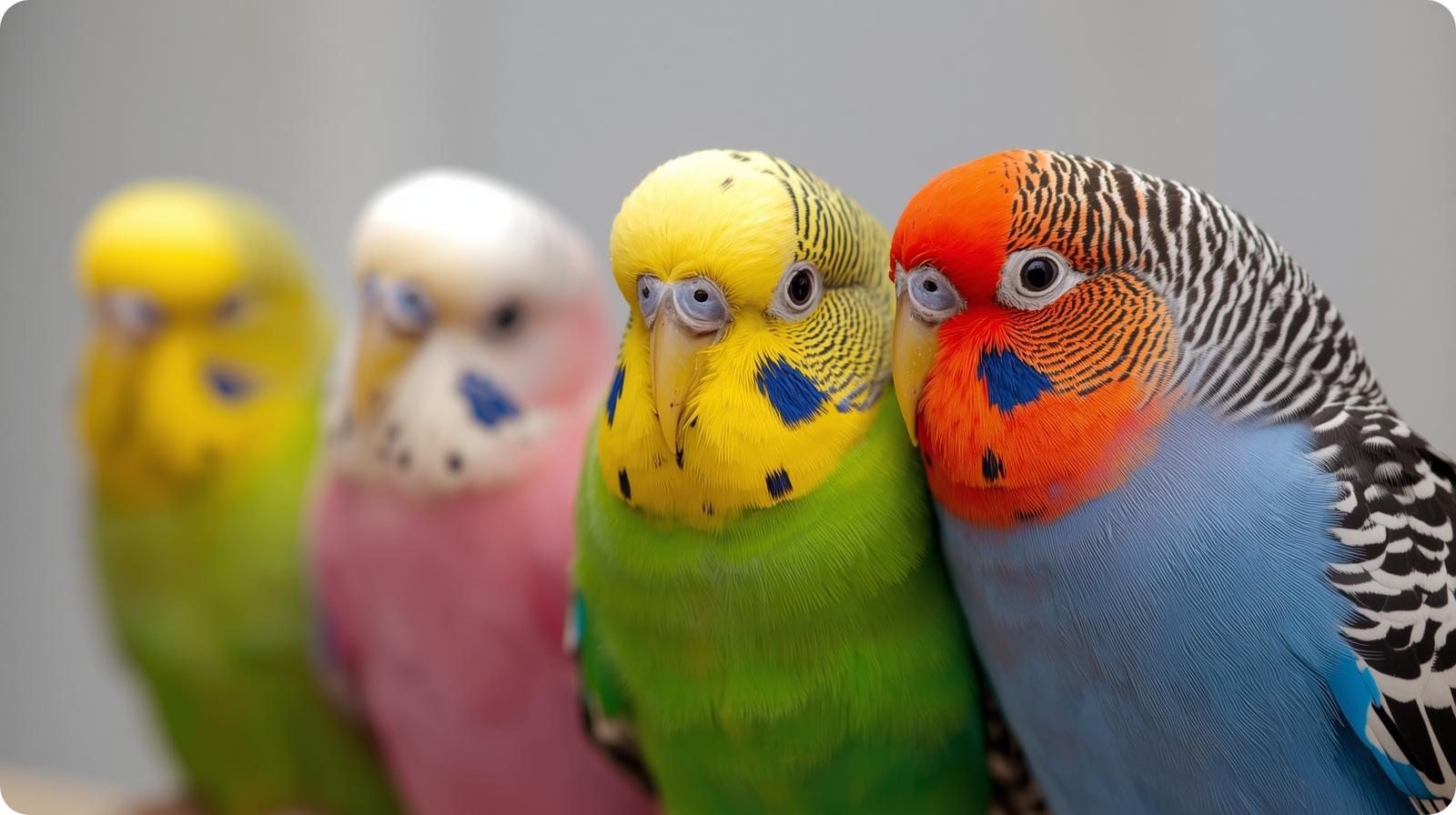
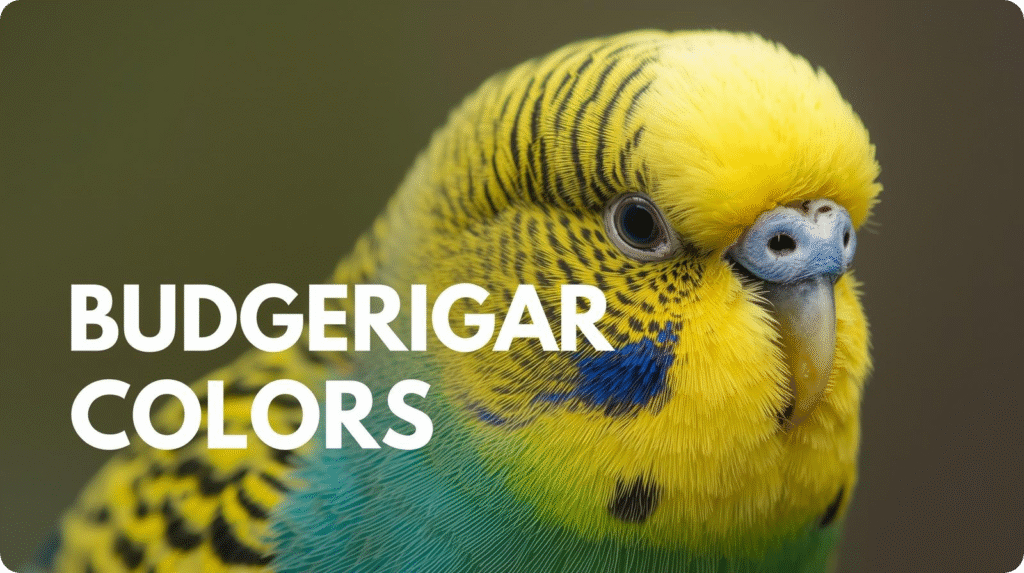
Have you ever seen a budgie and wondered about all the amazing colors they come in? When you explore the colorful world of budgerigar colors, you will see a beautiful rainbow. It includes wild greens, bright blues, rare violets, and pure whites.
Budgerigar color have amazed bird lovers for over 150 years. These small Australian parrots went from plain green birds to a dazzling array of colors through careful breeding. If you are choosing your first budgie or just curious, learning about budgerigar color is very exciting.
Where Budgerigar Colors Come From
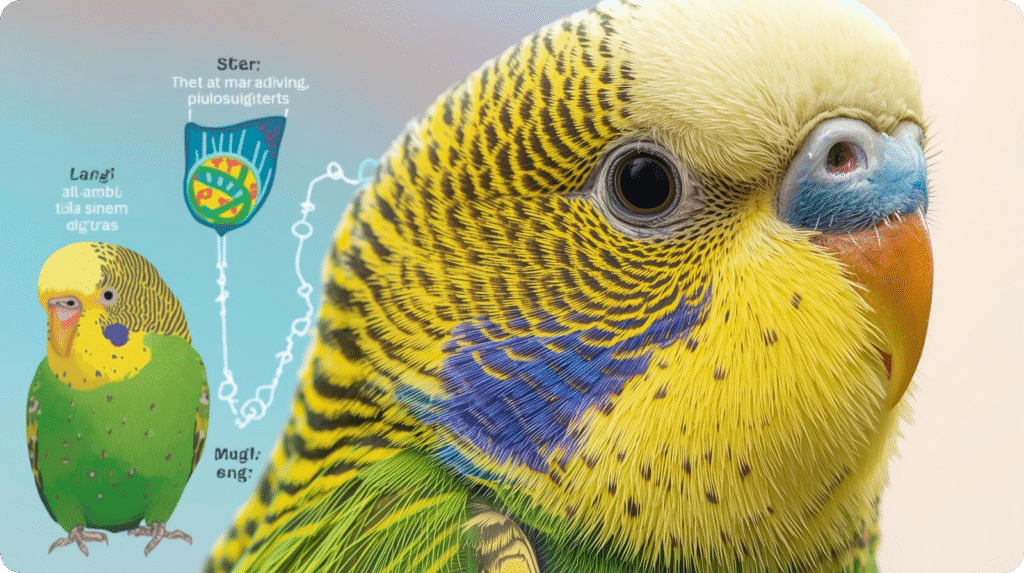
Let’s start with the basics. In the wild, all budgies look pretty much the same. Wild budgerigar color are bright green with yellow faces and black stripes on their heads, wings, and backs.
This color combo helps them hide in the Australian bush. The green blends with leaves. The yellow looks like sunlight filtering through trees. Pretty clever, right?
These original budgerigar color come from two types of color chemicals:
- Melanin (makes blacks, grays, and browns)
- Psittacin (makes yellows and warm colors)
When yellow sits on top of blue in the feathers, you get green. This is key to understanding all budgerigar colors today.
The story of modern budgerigar color started in the 1840s. Budgies arrived in Europe, and breeders noticed some birds with different colors. They started breeding these special birds, and the rest is history!
How Budgerigar Colors Work
Don’t worry – you don’t need to be a scientist to understand budgerigar color! The basic idea is simple.
Budgerigar color come from genes. These genes control different parts of how a budgie looks. They follow patterns we can predict.
The Main Color Rules:
The blue gene removes yellow color. This changes green birds to blue ones.
The dark gene makes colors deeper and richer.
The violet gene adds purple tones to budgerigar colors.
Dilution genes make colors lighter and softer.
Simple vs. Hard to Get:
Some budgerigar color show up easily (we call these dominant). Others need special breeding (we call these recessive). This explains why you see certain budgerigar color more often than others.
Special Inheritance:
Some budgerigar color pass down differently to male and female chicks. Opaline, cinnamon, and ino varieties work this way. We call these sex-linked budgerigar color.
The Two Main Groups of Budgerigar Colors
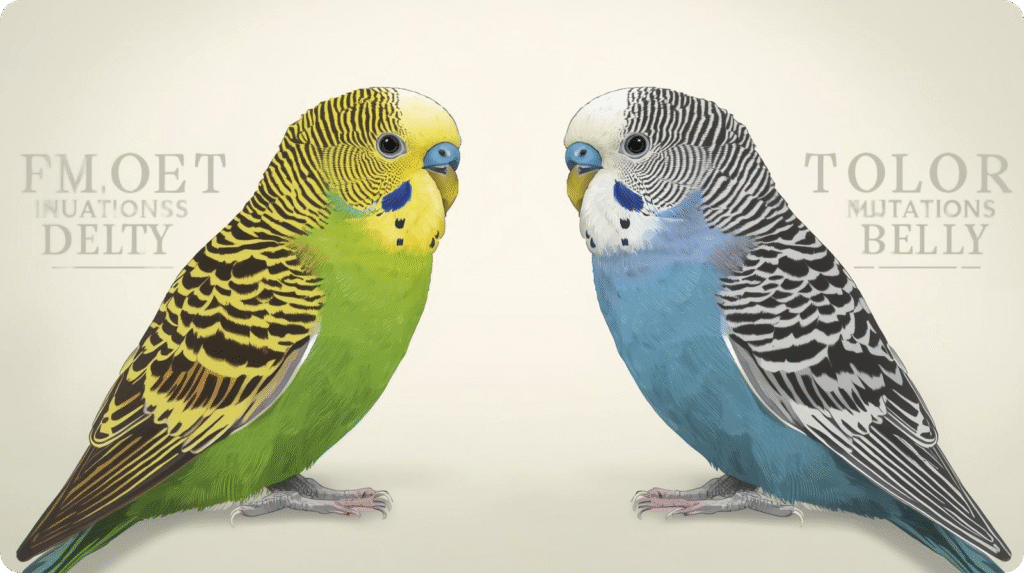
All budgerigar color fit into two big groups: green series and blue series. This is the starting point for every color you’ll see.
Green Series Budgerigar Colors
Green series budgerigar color have yellow mixed with blue. These are the most common budgerigar color you’ll find.
Light Green is the classic look. These budgerigar color show bright grass-green bodies with yellow faces and black wing stripes. This is what wild budgies look like. Many people love these budgerigar color because they’re so natural and pretty.
Dark Green budgerigar color are richer and deeper. They look more like forest green. These birds have one dark gene that makes the green more intense.
Olive Green is the darkest of the green budgerigar color. These birds have two dark genes. They show a unique yellow-green or brownish-green color. These budgerigar color look quite different from lighter greens.
Blue Series Budgerigar Colors
Blue series budgerigar color have no yellow at all. You see pure blue instead. These stunning budgerigar color happen when the blue mutation removes all yellow.
Sky Blue is the lightest of the blue budgerigar color. These birds have bright, clear blue bodies with white faces. Sky blue is one of the most popular budgerigar color ever.
Cobalt Blue budgerigar color are rich and deep. They’re darker than sky blue. One dark gene creates this beautiful shade of budgerigar colors.
Mauve is the darkest standard blue budgerigar color. These birds show a gray-purple or dusty blue color. Two dark genes create these unique budgerigar color.
Special and Rare Budgerigar Colors
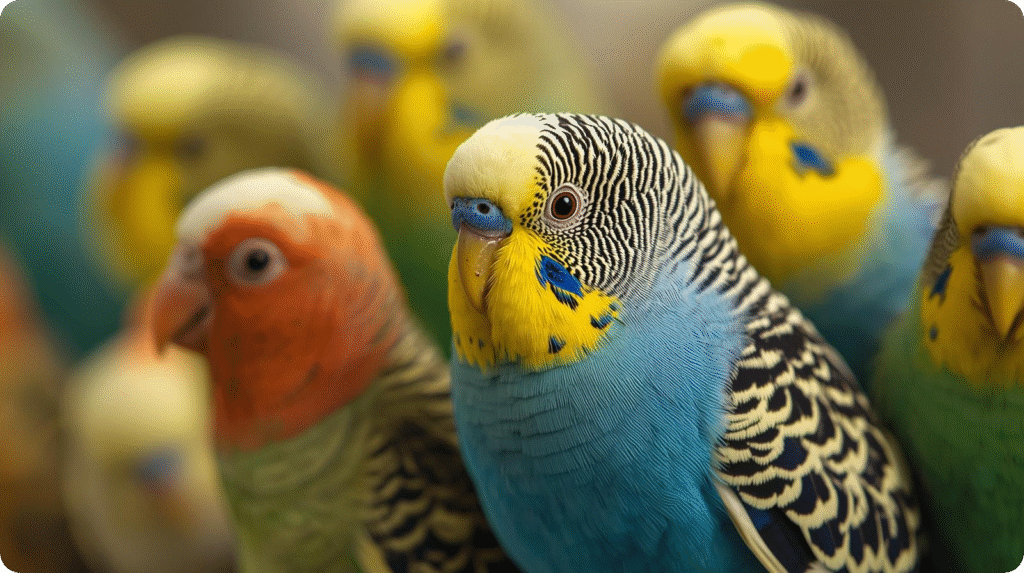
Now let’s look at the really exciting stuff! Beyond basic greens and blues, there are amazing budgerigar color that wow everyone.
Violet Budgerigar Colors
Violet is one of the most wanted budgerigar color. It creates stunning purple tones.
True violet budgerigar color need special genes working together. They look best on cobalt blue birds, making deep purple shades. These budgerigar color are rare and beautiful.
Lutino Budgerigar Colors
Lutino budgerigar colors are pure sunshine! These birds are bright yellow with white wing marks and red eyes.
Lutinos have no black color at all. They’re some of the brightest, happiest-looking budgerigar colors available. Think of them as the yellow version of white albinos.
Albino Budgerigar Colors
Albino budgerigar color are pure white. These birds have no markings and show red eyes.
They’re elegant and simple. While they lack the bright colors of other types, many people love these clean, white budgerigar color.
Gray Budgerigar Colors
Gray budgerigar color add gray tones to normal colors. This creates soft, muted shades.
Gray greens look olive-gray. Gray blues look pure gray. These budgerigar color appeal to people who like subtle, classy looks.
Clearwing Budgerigar Colors
Clearwing budgerigar colors have normal body colors but very light wing marks.
The wings look much clearer than normal budgerigar color. This creates a nice two-tone look that many people find attractive.
Spangle Budgerigar Colors
Spangle budgerigar colors flip the normal pattern. Where regular budgies have black marks on yellow backgrounds, spangle birds have it backwards!
Single spangles show reversed wing patterns. Double spangles can look almost all yellow or white. These budgerigar color rival lutinos and albinos for brightness.
Pattern Types in Budgerigar Colors
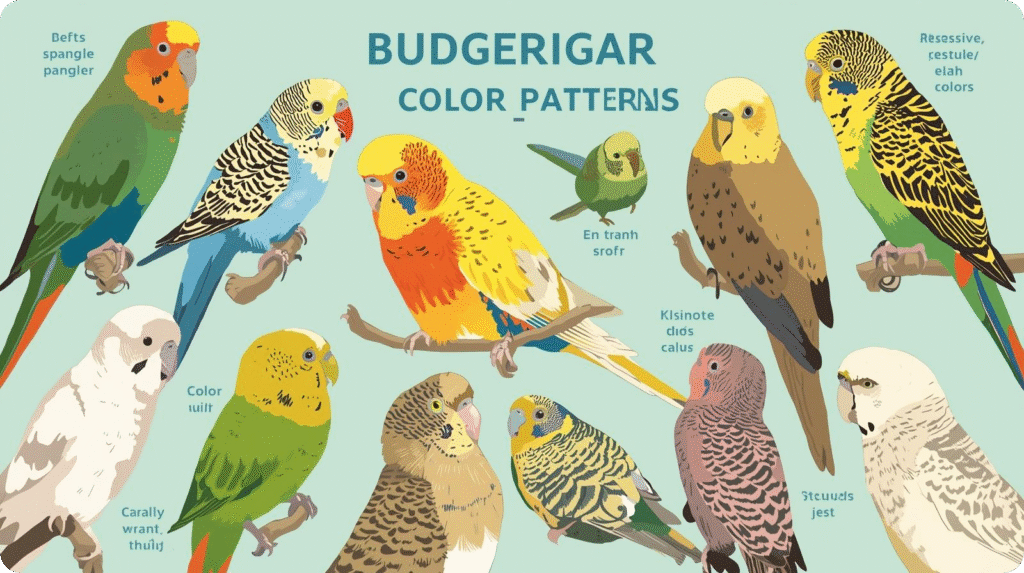
Patterns add another layer of beauty to budgerigar color. Let’s look at the most popular ones.
Opaline Budgerigar Colors
Patterns add another layer of beauty to budgerigar color. Let’s look at the most popular ones.
This makes budgerigar color look softer and more blended. Opaline works with any base color. You can get opaline greens, blues, violets, and more.
Cinnamon Budgerigar Colors
Cinnamon budgerigar color swap black for brown. This creates warmer, gentler versions of standard budgerigar colors.
Instead of black wing stripes, cinnamon budgies show brown patterns. Many people prefer these softer budgerigar colors.
Pied Budgerigar Colors
Pied budgerigar color mix normal colors with white or yellow patches.
Every pied budgie looks different! No two have the same pattern. This makes pied budgerigar colors really special and unique.
Yellowface Budgerigar Colors
Yellowface adds yellow to blue series budgerigar color. This creates amazing turquoise and sea-green effects.
These budgerigar color bridge the gap between pure blues and greens. They’re becoming more and more popular.
Rainbow Budgerigar Colors
Rainbow budgerigar color combine several mutations at once. They mix opaline, yellowface, and clearwing patterns.
The result? Some of the most amazing budgerigar color you’ll ever see! These birds have pastel bodies, bright faces, and clear wings.
The Rarest Budgerigar Colors
Some budgerigar colors are super rare. Breeders work for years to create them.
Anthracite is one of the newest and rarest budgerigar color. It shows a unique dark gray that doesn’t exist in other budgerigar colors.
Saddleback budgerigar color have color only on the wings, like a horse saddle. Very rare and very cool!
Blackface budgerigar colors have dark face feathers that look like a mask. Extremely rare.
Fallow budgerigar colors show brown instead of black stripes, plus red eyes. Quite uncommon.
The rarest budgerigar color often come from new mutations or tricky breeding combinations.
Budgerigar Colors Comparison Table
| Color Name | Type | Body Color | Face Color | Eye Color | How Common | Best For | Time Period & Notes |
|---|---|---|---|---|---|---|---|
| Light Green | Green | Bright green | Yellow | Dark | Very Common | Beginners | Original wild type. The base mutation all others derive from. |
| Sky Blue | Blue | Bright blue | White | Dark | Very Common | Beginners | First major mutation (1870s). A single genetic change from Light Green. |
| Cobalt Blue | Blue | Deep blue | White | Dark | Common | Color fans | Darker development of Sky Blue. An early refinement. |
| Olive Green | Green | Yellow-brown | Yellow | Dark | Common | Unique looks | Early dark factor development from Light Green. |
| Lutino | Green | Bright yellow | Yellow | Red | Common | Bright colors | First sex-linked mutation (early 1900s). Removes blue/gray, reveals yellow. |
| Albino | Blue | Pure white | White | Red | Common | Simple beauty | The blue-series version of Lutino. |
| Gray | Both | Gray tones | Yellow/White | Dark | Uncommon | Subtle taste | Established as a distinct variety early 20th century. |
| Mauve | Blue | Gray-purple | White | Dark | Fairly Common | Classy style | A further dark factor combination in the blue series. |
| Violet | Both | Deep purple | Yellow/White | Dark | Uncommon | Collectors | A later, complex modifier influencing depth of color. |
| Spangle | Both | Variable | Variable | Dark | Fairly Common | Unique patterns | A dominant pattern mutation (1970s). Alters feather markings, not base color. |
| Rainbow | Blue | Pastel | Yellow | Dark | Rare | Color lovers | Modern combination (1990s+). Requires specific blend of opaline, yellowface, and clearwing mutations. |
Budgerigar colors aren’t always the same from birth to adulthood. Here’s what happens.
Baby Stage: Young budgies don’t show their final budgerigar color right away. Baby colors often look different from adult shades. The colors might be lighter or less bright.
First Molt: Around 3-4 months old, big changes happen. The baby head stripes disappear. The face becomes clean and smooth.
The budgerigar colors become richer and brighter. This is when you see the true adult colors.
Through the Year: Some budgerigar color change slightly with seasons. During breeding time, colors may look more intense. When molting, budgerigar colors can look patchy for a while.
Getting Older: Older budgies might show subtle changes in budgerigar color. Some colors may fade a little. But healthy birds keep their budgerigar color looking good throughout life.
What Affects Budgerigar Colors
Several things can change how budgerigar color look, even in healthy birds.
Food and Budgerigar Colors
Good food keeps budgerigar color bright and beautiful.
Poor diet can make budgerigar colors look dull or faded. Birds need vitamins and minerals to show their best colors.
Feed your budgie quality pellets and fresh veggies. This helps budgerigar color stay as vibrant as possible.
Light and How We See Budgerigar Colors
Light makes a big difference in how we see budgerigar colors.
Natural sunlight shows budgerigar color most accurately. Indoor lights can make the same budgerigar color look quite different.
Budgies can see UV light that we can’t. This means they see budgerigar color differently than we do!
Health and Color Quality
Sick birds show duller budgerigar color.
Stress or illness creates bars on feathers. These show the bird wasn’t healthy when those feathers grew.
Healthy budgies have the brightest, most beautiful budgerigar color with smooth, sleek feathers.
Your Home Environment
Smoke, fumes, or harsh cleaners can damage feathers. This changes how budgerigar colors look.
Keep your budgie’s area clean and safe. This helps budgerigar color stay bright and feathers stay healthy.
Picking Your Budgerigar Colors
Ready to choose a budgie? Here’s how to pick the right budgerigar color for you.
What Colors Do You Like?
The best budgerigar color are the ones YOU think look great!
Do you love classic greens? Brilliant blues? Sunny yellows? Pick budgerigar color that make you smile.
Don’t let anyone tell you which budgerigar color are “best.” It’s all about what you enjoy.
Price and Finding Them
Common budgerigar color cost less and are easy to find. Light green, sky blue, and lutino are usually cheap.
Rare budgerigar color like violet or anthracite cost more. You might need to find special breeders for these budgerigar color.
For Shows
Want to show your budgie? Some budgerigar color work better for competitions.
Show birds must meet strict rules about color purity and patterns. Show-quality budgerigar color need careful breeding.
For Breeding
Planning to breed budgies? Choose your budgerigar color carefully based on what you want to create.
Learn about genetics first. This helps you predict which budgerigar color babies might have.
Personality Wins
Here’s the truth: budgerigar colors are pretty, but personality matters more!
A friendly budgie in your second-choice color is better than your dream budgerigar color on a mean bird.
Spend time with budgies before buying. Pick one with a great personality, whatever the budgerigar color.
Breeding for Budgerigar Colors
Want to create specific budgerigar color? It takes knowledge and patience.
The Basics
Breeding budgerigar colors means understanding genetics.
Simple budgerigar color are fairly easy to predict. Complex colors with many mutations are much harder.
Keep good records! Write down which budgerigar color each bird has (both visible and hidden genes).
Pairing Birds
Different pairings create different budgerigar color in babies.
Two birds of the same color usually make babies that color. Mixing different budgerigar color gives more varied results.
Some pairs predictably make certain budgerigar color. Others surprise you!
Doing It Right
Always put bird health first, before budgerigar colors.
Some color combinations can create weak babies. Good breeders avoid these pairings, even if they might make pretty budgerigar color.
Bird welfare always comes before making specific budgerigar colors.
Caring for Different Budgerigar Colors
All budgerigar color need similar care. But some need a few special things.
Light-Colored Birds
Lutinos and albinos (very light budgerigar colors) might be more sensitive to bright light.
Give these budgerigar color some shade options. They’ll stay comfortable in bright rooms.
Show Birds
Exhibition birds with special budgerigar color often get extra conditioning. Special diets and grooming help them look their best.
Regular Pet Care
Pet budgies of any budgerigar color thrive with good basic care:
- Quality food
- Clean, big cage
- Lots of toys
- Daily attention and play time
These things keep all budgerigar color healthy and bright.
The Future of Budgerigar Colors
The world of budgerigar colors keeps changing and growing!
New Colors Coming
Sometimes brand new mutations appear. These create budgerigar colors nobody has seen before.
Recent years brought anthracite and saddleback. What will come next? We can only imagine what future budgerigar color might look like!
Saving Rare Colors
As new budgerigar color emerge, we need to protect old rare ones too.
Some historical budgerigar color could disappear without breeder help. Good breeders work to keep all budgerigar color available for the future.
Technology Helping
Science keeps improving our understanding of budgerigar colors.
DNA tests might someday predict budgerigar color perfectly. But hands-on breeding will always be important too.
Common Myths About Budgerigar Colors
Let’s clear up some wrong ideas about budgerigar colors.
Myth: Color shows personality. Wrong! Budgerigar color don’t affect personality.
Blues aren’t calmer than greens. Yellows aren’t friendlier than blues. Every bird is different, no matter what budgerigar colors they have.
Myth: Rare colors are always better. Not true! Common budgerigar color can be just as healthy and beautiful. Some rare budgerigar color might even have health issues.
Myth: Wild colors are always strongest. False! Many non-wild budgerigar colors are equally healthy when bred right.
Myth: Food changes colors. No way!
Genetics set budgerigar color permanently. Good food keeps color bright, but can’t change blue to green. Healthy eating helps budgerigar color look their best, but doesn’t alter them.
Frequently Asked Questions About Budgerigar Colors
Q: What are the most common budgerigar colors?
A: The most common budgerigar color are light green and sky blue. You’ll also see dark green, cobalt, olive, and mauve pretty often. Lutino (bright yellow) and albino (pure white) budgerigar color are easy to find too.
These budgerigar color are great for beginners. They’re affordable and available at most pet stores. They’re also usually healthy and hardy birds.
Q: Which budgerigar colors are the rarest?
The rarest colors of budgerigars are:
– Anthracite (dark gray)
– Saddleback (color only on wings)
– Blackface (dark face)
– Fallow (brown with red eyes) Some rare budgerigar colors include high-quality violets and special rainbow combinations.
These budgerigar color cost more money. You might need to join waiting lists for special breeders. But remember – rare doesn’t always mean better!
Q: Do budgerigar colors affect personality?
A: No! There’s no link between budgerigar colors and personality. Every budgie is unique.
Green budgies aren’t different in personality from blue ones. Lutinos aren’t friendlier than cobalts. Individual genetics, upbringing, and environment shape personality, not budgerigar color.
When picking a budgie, watch how individual birds act. Don’t assume budgerigar color tell you about personality.
Q: Can budgerigar colors change as birds get older?
A: Genes determine budgerigar color, and they don’t really change. But how they look can shift a bit.
Baby budgies have duller budgerigar color that brighten at 3-4 months old. Seasons might cause tiny changes in how bright budgerigar color look.
Poor health can temporarily dull budgerigar color. But a blue budgie won’t turn green. A yellow one won’t become olive. Good care keeps budgerigar color looking vibrant for life.
Q: What makes budgerigar colors work genetically?
A: Budgerigar colors come from several genes working together. The main split is green series (has yellow) versus blue series (no yellow). The dark gene makes colors deeper, creating darker budgerigar colors like olive or mauve.
Other genes control patterns (opaline, spangle, pied) and special effects (violet, gray). Some are dominant (easy to get), others recessive (need both parents). Some are sex-linked (pass differently to males and females). Learning this helps breeders predict budgerigar color in babies.
Q: Are some budgerigar colors healthier?
A: Most budgerigar colors are equally healthy with good breeding. But some pairings to avoid – breeding two birds with certain genes can make weak babies.
Lutinos and albinos sometimes have slightly less energy than other budgerigar color. But many are perfectly healthy!
The real key is good breeding, good food, and good care – not which budgerigar colors a bird has. Well-bred birds of any budgerigar colors can live long, happy lives.
Q: How do I choose budgerigar colors?
A: Pick budgerigar color you find beautiful! You’ll look at your budgie every day, so choose colors you love.
Common budgerigar colors like light green, sky blue, or lutino are cheap and easy to find. Rarer budgerigar colors like violet cost more.
If you want to breed, learn about genetics for your favorite budgerigar color. But here’s the key – pick personality and health over budgerigar color! A friendly, healthy budgie in your second choice beats perfect budgerigar color on a sick or mean bird.
Q: What are yellowface budgerigar colors?
A: Yellowface budgerigar color happen when blue series budgies get genes that add yellow. This creates beautiful turquoise, sea-green, or aqua effects. There are three types: Type I (yellow face only), Type II (yellow all over body), and Golden Face (lots of yellow).
Yellowface budgerigar colors bridge blue and green series. They’re getting more popular because they’re so unique and pretty. These budgerigar colors combine the best parts of blues and greens.
Q: Can breeders predict budgerigar colors in babies?
A: Yes, if they know genetics! Simple budgerigar color like light green or sky blue are easy to predict. Complex budgerigar color with many mutations are harder.
Breeders keep detailed notes about each bird’s genes (visible and hidden). This helps predict baby budgerigar colors better.
Some pairings always make one color. Others create surprise budgerigar color.
Success needs patience, knowledge, and sometimes luck. Good breeders always put bird health before getting certain budgerigar colors.
Q: Are show budgies different colors than pets?
A: Show and pet budgies can have the same budgerigar color. But show birds must meet very strict rules. Judges evaluate exhibition budgerigar color based on their clarity, depth, and evenness.
Breeders raise show budgies for perfect size, posture, and the best examples of budgerigar color. Pet budgies might have the same genetic budgerigar color but not perfect enough for shows. That’s totally fine! Pet budgies of any budgerigar color make wonderful friends, whether they could win shows or not.
Conclusion
When you Discover the Vibrant World of Budgerigar Colors, you’re exploring one of nature’s most amazing color shows! You can find many colors in budgerigars.
They come in classic light green and sky blue. You can also see stunning violets, soft rainbows, and pure white albinos. There is something for everyone.
Learning about budgerigar color involves understanding genetics. It also includes seeing how the environment affects colors. We should respect the breeders who create new budgerigar color. Whether you love common budgerigar color or want rare ones, the budgie world has it all.
Budgerigar colors are more than just pretty. Each color variety has its own history and story. Asking “What color budgie should I get?” opens up a whole world of genetics and diversity.
When choosing your favorite budgerigar color, remember this: color is attractive. However, personality and health are more important. The most beautiful budgerigar color won’t make up for a sick or unfriendly bird.
The future of budgerigar color looks bright! New mutations keep appearing. Better breeding methods develop. Tomorrow’s budgie fans might see budgerigar colors we can’t imagine yet.
No matter what type of budgerigar you choose, you are joining bird lovers everywhere. You can pick classic colors, rare types, or a budgie with a great personality. The vibrant world of budgerigar color is waiting – which beautiful color will you choose?
Leave a Reply