


If you’re considering adding a blue quaker parrot to your family, you’ve come to the right place. The Blue Quaker Parrot: The Ultimate Guide will walk you through everything you need to know about these stunning, intelligent birds. Whether you are a first-time bird owner or an experienced bird lover, it is important to know about the blue quaker parrot. Understanding its unique traits, care needs, and personality will help you provide the best home for your feathered friend.
What Is a Blue Quaker Parrot?

The blue quaker parrot is a color variation of the Quaker parrot. People also call it the Monk parakeet. Its scientific name is Myiopsitta monachus.
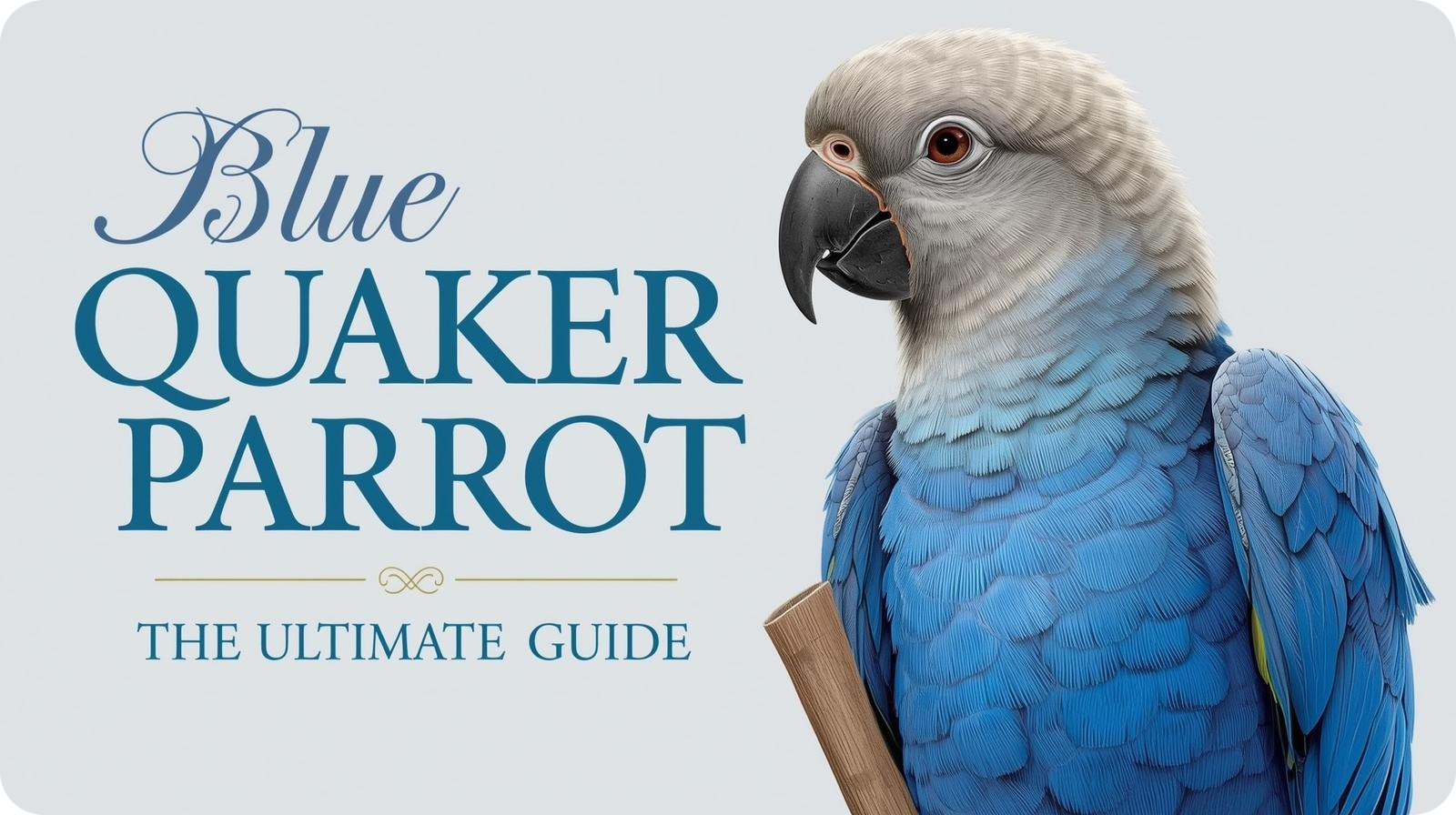
Wild Quaker parrots have bright green feathers, gray chests, and blue wings. In contrast, the blue Quaker parrot has a lovely blue color. This blue comes from selective breeding.
Understanding the Color Mutation
Blue quaker parrots are not a separate species but rather a genetic variation. This stunning blue coloration occurs when breeders selectively pair birds carrying specific color genes. The result is a beautiful bird.
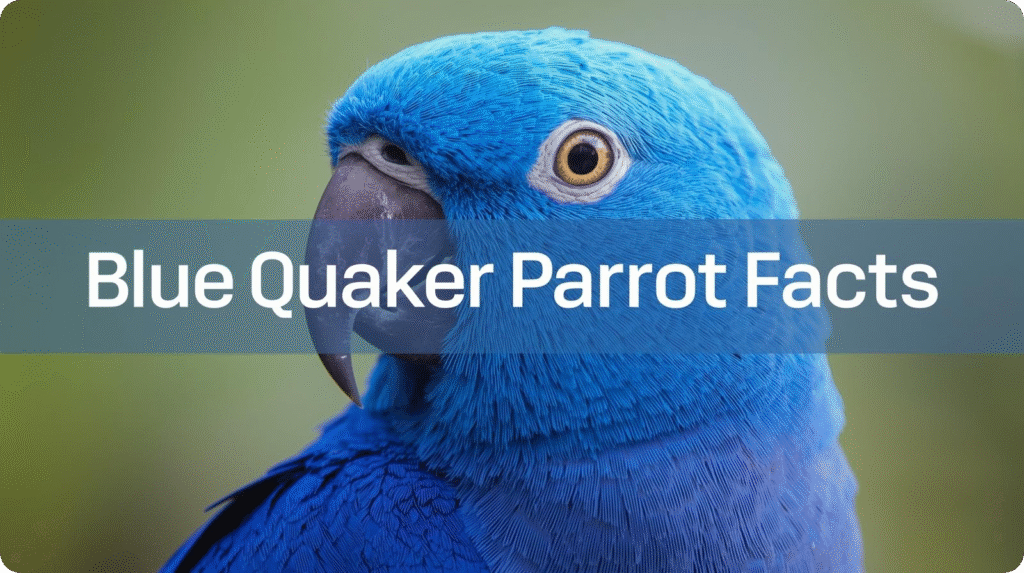
Its colors range from soft powder blue to deep cobalt blue. It often has lighter gray or white feathers on its breast.
Key characteristics of blue quaker parrots include:
- Medium-sized parrots measuring 11-12 inches in length
- Weight ranging from 90-120 grams
- Vibrant blue plumage replacing the traditional green coloration
- Gray to white breast and facial feathers
- Bright, intelligent eyes that reflect their curious nature
- Strong, hooked beaks designed for cracking seeds and nuts
Personality and Temperament
One of the most endearing aspects of owning a blue quaker parrot is their dynamic personality. These birds are renowned for their intelligence, social nature, and entertaining antics.
Social and Affectionate Nature
Blue quaker parrots form strong bonds with their human companions. They thrive on interaction and can become deeply attached to their favorite person. Many owners describe their blue quaker parrots as “velcro birds” because they love spending time perched on shoulders or hands.
Intelligence and Talking Ability
Quaker parrots, including blue varieties, are exceptional talkers. They can develop word collections of 50 words or more and often use words in appropriate contexts. Their ability to mimic sounds, whistles, and even household noises makes them entertaining companions.
Behavioral traits to expect:
- High energy levels requiring daily interaction and stimulation
- Tendency to be territorial about their cage or favorite spaces
- Playful and curious disposition, often getting into mischief
- Potential for loud sounds, especially during morning and evening hours
- Strong problem-solving abilities that require engaging toys and puzzles
Housing Requirements for Your Blue Quaker Parrot
Providing appropriate housing is crucial for your blue quaker parrot’s physical and mental wellbeing. These active birds need spacious environments that allow for exercise and exploration.
Cage Size and Setup
The minimum cage size for a blue quaker parrot should be 24 inches wide, 24 inches deep, and 30 inches high. However, a larger cage is always better. Horizontal bars are preferable as they allow for climbing, which Quakers love.
Essential cage features:
- Bar spacing between 1/2 inch to 5/8 inch to prevent escape or injury
- Multiple perches of varying diameters and materials to promote foot health
- Stainless steel or powder-coated cages that resist rust and are easy to clean
- Multiple food and water dishes positioned at different heights
- A dedicated area for toys that can be rotated regularly
Location and Environment
Put your blue quaker parrot’s cage in a family area. This way, they can watch daily activities.
Make sure it is not in direct drafts or sunlight for too long. Also, keep it away from kitchen fumes. These social birds become stressed when isolated from their flock (your family).
Temperature control is important. Blue quaker parrots are comfortable in temperatures between 65-80°F (18-27°C). Avoid sudden temperature fluctuations and ensure proper humidity levels between 40-60%.
Nutrition and Feeding Guide
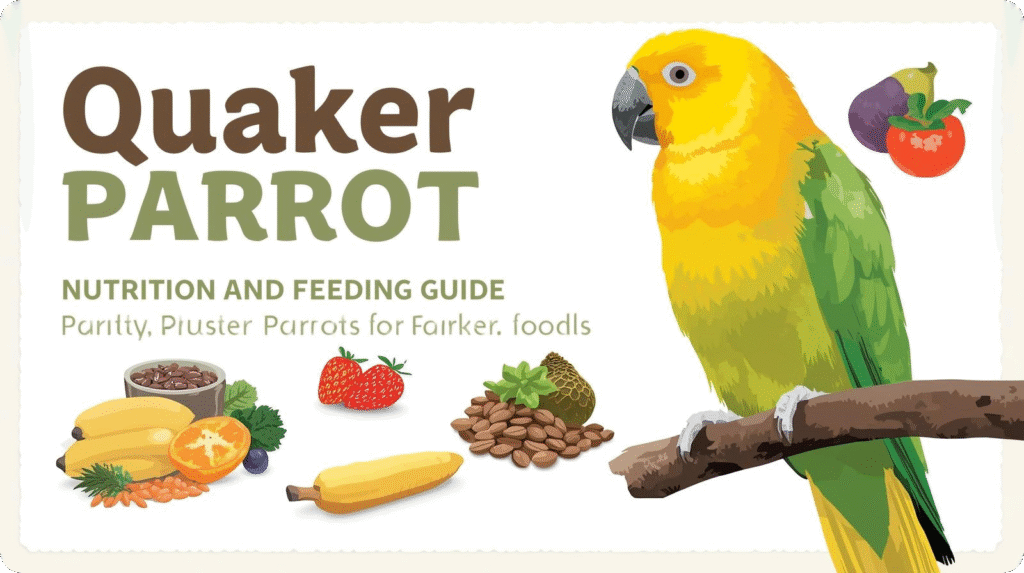
A balanced diet is fundamental to keeping your blue quaker parrot healthy and vibrant. Proper nutrition affects everything from plumage quality to immune system function and longevity.
Balanced Diet Components
A healthy blue quaker parrot diet should consist of:
High-quality pellets (60-70% of diet): Choose organic, dye-free pellets specifically formulated for medium-sized parrots. Pellets provide balanced nutrition and prevent selective eating.
Fresh vegetables (20-25% of diet): Offer dark leafy greens like kale, spinach, and Swiss chard. Include colorful vegetables such as carrots, bell peppers, broccoli, and sweet potatoes. Introduce new vegetables gradually to encourage acceptance.
Fresh fruits (5-10% of diet): Provide fruits like apples, berries, mango, and papaya in moderation because of sugar content. Always remove seeds and pits that may be toxic.
Seeds and nuts (5% of diet): Offer as treats rather than staple foods. Suitable options include sunflower seeds, pumpkin seeds, almonds, and walnuts in small quantities.
Foods to Avoid
Never feed your blue quaker parrot:
- Avocado (highly toxic to birds)
- Chocolate, caffeine, or alcohol
- High-salt or high-sugar processed foods
- Onions and garlic
- Apple seeds, cherry pits, and apricot pits
- Raw beans or dried legumes
Fresh, clean water must be available and changed daily.
Health Care and Common Issues
Blue quaker parrots can live 20-30 years with proper care, making preventive health maintenance essential for their longevity.
Regular Veterinary Care
Establish a relationship with an avian animal care expert immediately after acquiring your blue quaker parrot. Annual wellness examinations help detect health issues early. Your pet doctor will check weight, perform physical examinations, and may recommend blood work or fecal testing.
Common Health Concerns
Fatty liver disease: Results from high-fat diets, particularly seed-only diets. Prevention includes offering balanced pellet-based nutrition and ensuring adequate exercise.
Psittacosis (Parrot fever): A bacterial infection that can affect birds and humans. Symptoms include lethargy, discharge from eyes or nose, and difficulty breathing. Requires immediate veterinary attention.
Feather plucking: Often indicates stress, boredom, poor diet, or medical issues. Requires investigation to determine the underlying cause.
Breathing infections: Blue quaker parrots are sensitive to things in the air. This includes cigarette smoke, aerosols, and Teflon fumes from hot cookware.
Signs of Illness
Contact your avian pet doctor immediately if you observe:
- Changes in droppings (color, consistency, or frequency)
- Fluffed feathers or hunched posture
- Decreased appetite or water intake
- Lethargy or sleeping more than usual
- Nasal or eye discharge
- Difficulty breathing or tail bobbing
- Sudden behavioral changes
Training and Socialization
Blue quaker parrots are highly trainable birds that respond well to positive reinforcement techniques. Early training and consistent socialization produce well-adjusted, confident companions.
Basic Training Techniques
Step-up command: This fundamental command teaches your blue quaker parrot to step onto your finger or hand on request. Practice daily using treats and praise as rewards.
Recall training: Train your bird to fly to you when called. This skill is essential for safety and strengthening your bond.
Bite pressure training: Teach appropriate bite pressure through gentle correction and reward-based methods. Quakers can develop nippy behaviors without proper guidance.
Enrichment and Mental Stimulation
Prevent boredom and destructive behaviors by providing:
- Foraging toys that require problem-solving to access treats
- Puzzle toys that challenge cognitive abilities
- Shredding materials like paper or palm leaves
- Rotation of toys every few weeks to maintain novelty
- Out-of-cage time for supervised exploration (minimum 2-3 hours daily)
- Training sessions that teach new tricks and commands
Legal Considerations and Availability

Before purchasing a blue quaker parrot, research local regulations carefully. Quaker parrots are illegal to own in some states and countries. This is because they can form wild colonies and may harm agriculture.
States Where Quaker Parrots Are Restricted
As of recent regulations, Quaker parrots (including blue mutations) face ownership restrictions in:
- California (completely banned)
- Colorado (requires permits)
- Connecticut (banned in some areas)
- Georgia (restricted)
- Hawaii (completely banned)
- Kansas (requires registration)
- Kentucky (restricted)
- Pennsylvania (requires permits in some counties)
- Rhode Island (banned)
- Tennessee (restricted)
- Wyoming (requires permits)
Always verify current local laws before acquiring a blue quaker parrot, as regulations can change.
Finding a Reputable Breeder
When ready to bring home a blue quaker parrot, seek reputable breeders who:
- Provide health guarantees and veterinary records
- Allow you to visit their breeding facility
- Socialize baby birds from an early age
- Offer guidance on care and diet
- Screen potential buyers to ensure appropriate homes
- Breed responsibly without making too much
Expect to pay between $400-$800 for a hand-raised blue quaker parrot from a quality breeder. Prices vary depending on the location, color intensity, and whether someone has already weaned the bird.
Breeding Blue Quaker Parrots
For those interested in breeding, understanding genetics and responsible breeding practices is essential.
Color Genetics
The blue mutation in Quaker parrots follows recessive inheritance patterns. Both parent birds must carry the blue gene for offspring to display blue coloration. Breeding two blue birds results in 100% blue offspring. When a blue bird is paired with a green bird that carries the blue gene, the offspring are roughly half blue and half green.
This demonstrates how genetic combinations influence feather color. Observing these patterns helps breeders predict outcomes more accurately.
Breeding Considerations
Breeding blue quaker parrots requires:
- Mature birds (at least 2 years old)
- Compatible, bonded pairs
- Appropriate nest boxes (approximately 12″ x 12″ x 18″)
- Nutritious diet supplemented with calcium during breeding season
- Quiet, stress-free environment
- Knowledge of hand-feeding techniques if intervention becomes necessary
- Commitment to finding suitable homes for offspring
Responsible breeding involves health testing parents, avoiding overbreeding, and putting first the welfare of both parent birds and chicks.
Living With a Blue Quaker Parrot
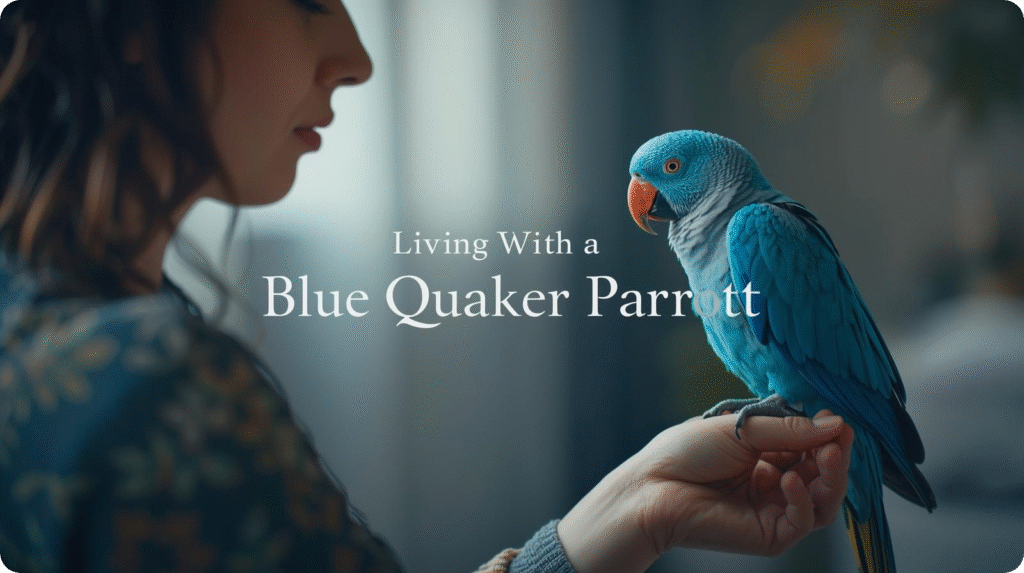
Day-to-day life with a blue quaker parrot brings joy, laughter, and occasional challenges. Understanding what to expect helps create realistic expectations.
Daily Care Routine
A typical day includes:
- Morning greeting and fresh food and water
- Brief health check (appearance, droppings, behavior)
- Supervised out-of-cage time for exercise and interaction
- Training or play sessions
- Evening meal and cage cleaning
- Covering the cage at bedtime (some owners find this helps regulate sleep schedules)
Building a Strong Bond
Strengthen your relationship with your blue quaker parrot through:
- Consistent daily interaction and handling
- Speaking to your bird throughout the day
- Including your bird in family activities
- Respecting body language and personal boundaries
- Providing favorite treats and toys
- Creating predictable routines that reduce stress
Managing Behavioral Challenges
Blue quaker parrots can develop behavioral issues without proper management:
Excessive screaming: Address by ensuring adequate sleep (10-12 hours), providing mental stimulation, and avoiding reinforcement of screaming through attention.
Territorial aggression: Establish that you control the cage by sometime rearranging contents and moving the cage location slightly.
Bonding with just one person can be a problem. Encourage everyone in the family to interact. This helps prevent strong bonds that can lead to aggression toward others.
Blue Quaker Parrot vs. Green Quaker Parrot: Complete Comparison
| Aspect | Blue Quaker Parrot | Green Quaker Parrot |
|---|---|---|
| Coloration | Blue plumage with gray/white breast feathers | Bright green body with gray breast and blue flight feathers |
| Genetic Background | Recessive color mutation through selective breeding | Natural wild-type coloration |
| Personality | Intelligent, social, playful, can be territorial | Intelligent, social, playful, can be territorial |
| Talking Ability | Excellent (50+ words possible) | Excellent (50+ words possible) |
| Intelligence Level | High problem-solving abilities | High problem-solving abilities |
| Temperament | Energetic, affectionate, bonds strongly with owners | Energetic, affectionate, bonds strongly with owners |
| Size | 11-12 inches, 90-120 grams | 11-12 inches, 90-120 grams |
| Lifespan | 20-30 years with proper care | 20-30 years with proper care |
| Cage Requirements | Minimum 24″x24″x30″ | Minimum 24″x24″x30″ |
| Diet | Pellets, vegetables, fruits, limited seeds/nuts | Pellets, vegetables, fruits, limited seeds/nuts |
| Exercise Needs | 2-3 hours out-of-cage time daily | 2-3 hours out-of-cage time daily |
| Noise Level | Moderate to loud, especially morning/evening | Moderate to loud, especially morning/evening |
| Health Concerns | Fatty liver disease, psittacosis, respiratory issues | Fatty liver disease, psittacosis, respiratory issues |
| Veterinary Care | Annual checkups with avian vet required | Annual checkups with avian vet required |
| Training Difficulty | Moderate, responds well to positive reinforcement | Moderate, responds well to positive reinforcement |
| Beginner Friendly | Suitable for dedicated beginners | Suitable for dedicated beginners |
| Price Range | $400-$800 | $300-$600 |
| Availability | Less common, may require finding specialized breeder | More readily available from breeders and pet stores |
| Legal Restrictions | Same state/country restrictions apply | Same state/country restrictions apply |
| Breeding | Requires two blue or split-to-blue parents | Natural breeding, more common offspring |
| Show/Exhibition | Less common in shows, highly desired by color enthusiasts | Common in shows, standard coloration |
| Best For | Owners seeking unique appearance, color collectors | First-time Quaker owners, traditional parrot enthusiasts |
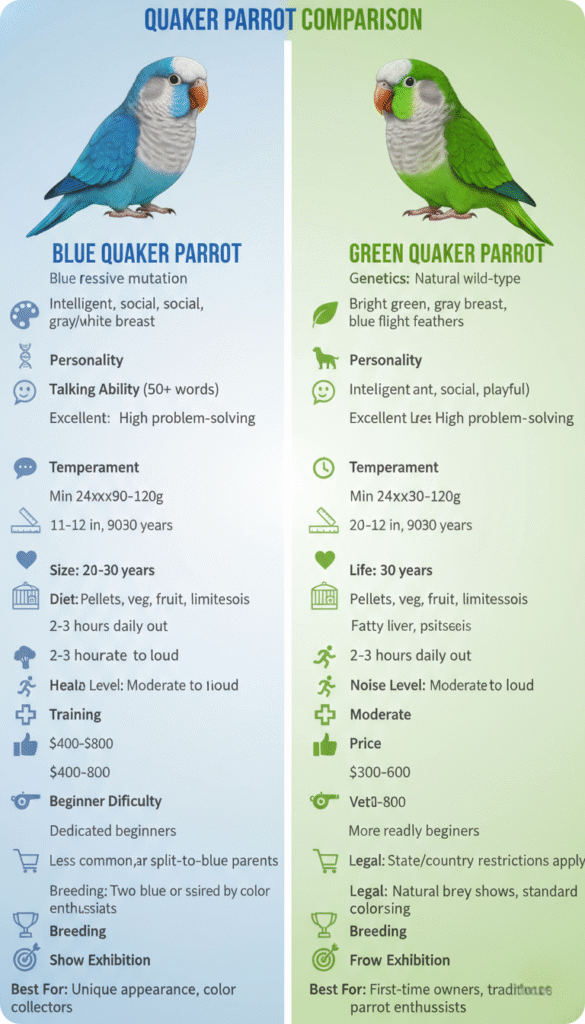
Many potential owners wonder whether the color mutation affects personality or care requirements. Here’s a detailed comparison table:
No Personality Differences: The main finding is that blue quaker parrots and green quaker parrots behave the same. Color mutation does not affect temperament, intelligence, talking ability, or care requirements.
Price Variation: Blue quaker parrots cost more because of special breeding needs and a higher demand for rare colors. However, ongoing care costs remain identical.
Availability Matters: Green Quaker parrots are easier to find at local breeders and adoption groups. Blue Quaker parrots may take more time to find or have waiting lists.
Choose Based on Preference: Your choice between blue and green should depend on your taste and budget. Do not base it on expected behavior differences.
Long-Term Commitment
Owning a blue quaker parrot represents a significant long-term commitment that prospective owners must carefully consider.
Time Investment
Blue quaker parrots require:
- Daily interaction (minimum 2-3 hours)
- Regular training sessions
- Cage maintenance and cleaning
- Meal preparation (fresh foods daily)
- Attention to health monitoring
- Socialization to prevent behavioral issues
Financial Commitment
Budget for ongoing expenses including:
- Quality pellets and fresh produce ($30-50 monthly)
- Toys and enrichment items ($20-40 monthly)
- Annual veterinary checkups ($100-200 per visit)
- Emergency veterinary care (set aside emergency fund of $500-1,000)
- Cage replacement or upgrades as needed
- Pet insurance (optional but recommended)
Lifestyle Considerations
Evaluate whether your lifestyle accommodates a blue quaker parrot:
- Can you provide daily attention and interaction?
- Are you comfortable with noise levels during morning and evening?
- Can you accommodate a pet for potentially 20-30 years?
- Do you have backup care arrangements for vacations or emergencies?
- Are household members willing to participate in care?
- Can you provide a safe, stable environment free from harmful fumes and hazards?
FAQs About Blue Quaker Parrots
Q: Are blue Quaker parrots rare?
Bird keepers regularly breed blue quaker parrots, which are less common than traditional green Quakers. People consider them uncommon rather than truly rare, though availability varies by region.
Q: How long do blue Quaker parrots live?
A: With proper care, blue quaker parrots typically live 20-30 years in captivity. Researchers have documented some living beyond 30 years with exceptional care and genetics.
Q: Can blue Quaker parrots talk?
A: Yes, blue quaker parrots are excellent talkers with the same vocal abilities as green Quakers. They can learn over 50 words and often use them correctly. Both male and female birds can talk, but some are more interested in mimicking speech than others.
Q: Are blue Quaker parrots good for beginners?
A: Blue quaker parrots can be suitable for dedicated first-time bird owners who thoroughly research their needs. However, they require significant time, attention, and proper training. They’re more demanding than budgies or cockatiels but less challenging than larger parrots like cockatoos or macaws.
Q: How much does a blue Quaker parrot cost?
A: Blue quaker parrots typically range from $400-$800 from reputable breeders, depending on location and specific coloration. Initial setup costs (cage, toys, supplies) add another $300-600, with ongoing monthly expenses of $50-100.
Q: Do blue Quaker parrots make good apartment pets?
Blue quaker parrots can live in apartments. However, their loud calls in the morning and evening might bother neighbors. Consider noise tolerance of surrounding units and establish training to manage volume before choosing this species for apartment living.
Q: Can blue Quaker parrots live with other birds?
Blue quaker parrots can be protective of their space. They may not get along well with other birds, even other Quakers. While some Quakers live In harmony with companions, others become aggressive.
Conclusion
The blue quaker parrot is a great pet for bird lovers. They need a lot of attention, care, and fun activities. These intelligent, social birds bring personality, entertainment, and affection into homes that can accommodate their requirements.
In this Blue Quaker Parrot: The Ultimate Guide, we have looked at key parts of owning a blue quaker parrot. We covered their special color genetics, housing needs, nutrition, health care, and training. These beautiful birds need a lot of time and money. However, the rewards of having a blue quaker parrot are great for those ready for the commitment.
Before bringing a blue quaker parrot home, think about whether you can meet their needs for the next 20 to 30 years. Research local regulations regarding Quaker parrot ownership, locate a qualified avian pet doctor, and connect with reputable breeders or adoption organizations. Consider joining online communities or local bird clubs to learn from experienced Quaker parrot owners.
You may love the bright blue feathers, enjoy their great talking skills, or appreciate their fun personality. The blue quaker parrot offers a special bird companionship experience. With good preparation, education, and commitment, your blue quaker parrot will thrive. A loved member of your family will emerge, bringing years of joy, laughter, and special moments.
Remember that every blue quaker parrot is an individual with unique preferences and personality traits. Patience, consistency, and genuine affection form the foundation of a successful relationship with these remarkable birds.
Take your time and do your research. Prepare well before bringing a blue quaker parrot into your life. You will receive one of the most entertaining and loving companions in the bird world.
Leave a Reply