
Budgerigars, affectionately known as budgies, are among the most popular pet birds worldwide, and for good reason. Their charming personalities, ability to mimic speech, and remarkably beautiful plumage make them irresistible companions.
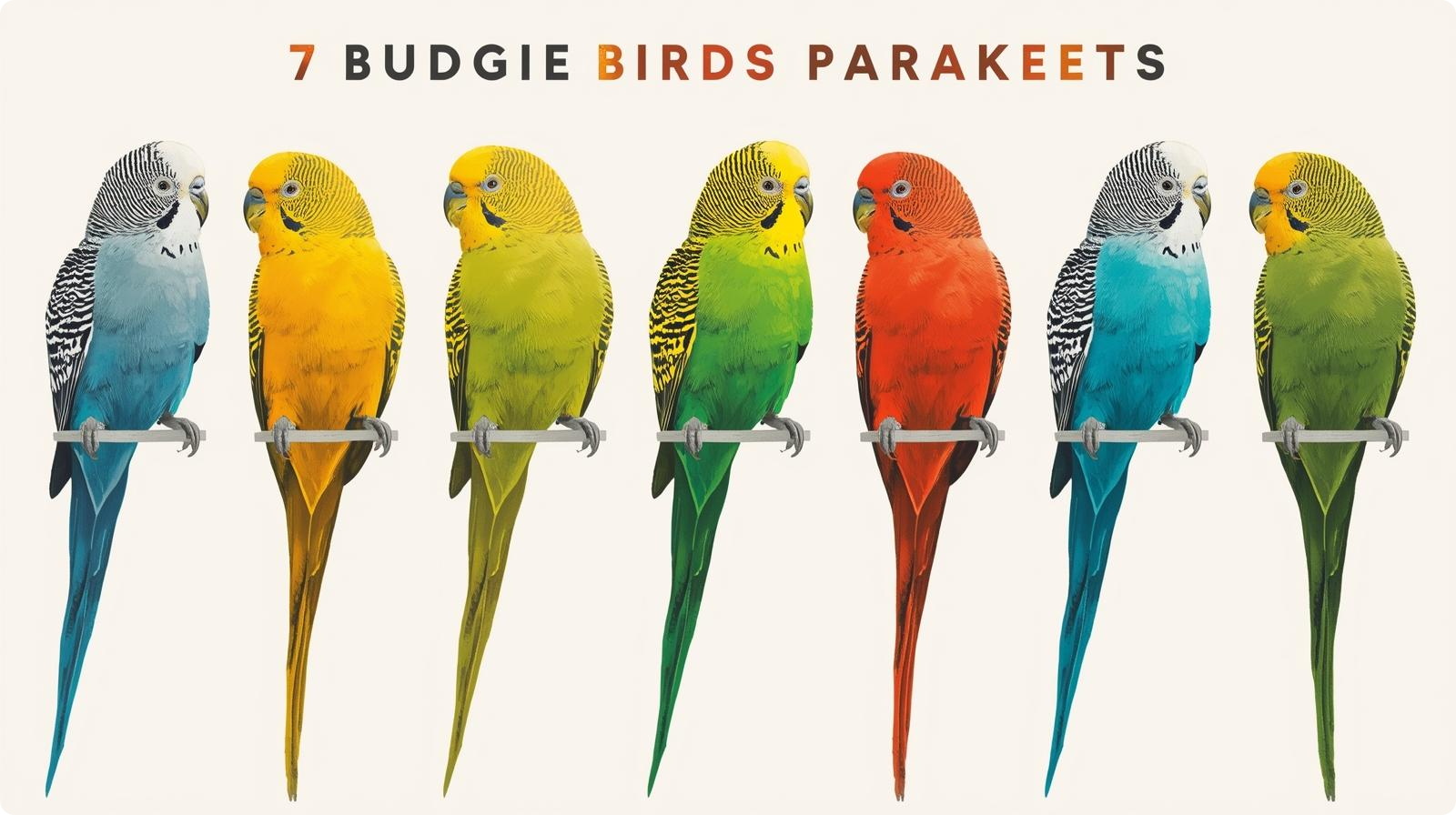
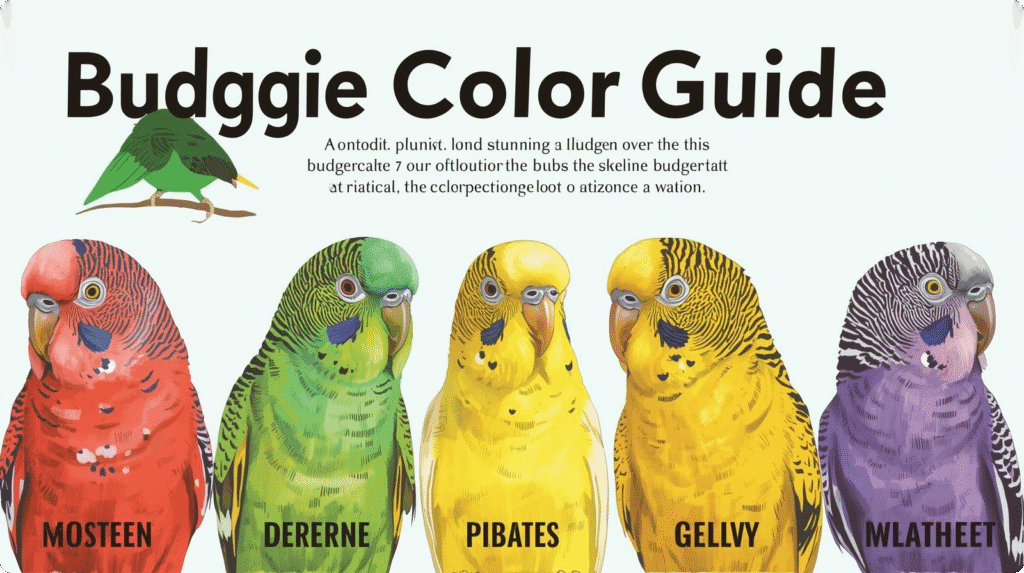
This guide, “7 Stunning Budgie Bird Colors,” looks at the amazing colors of budgie birds. It covers the common wild-type green and the rare, exotic types that attract bird lovers everywhere. Whether you are new to owning budgies or have bred them before, understanding budgie colors is important. It will help you appreciate these wonderful birds even more.
Budgies have been bred for over 150 years. This has led to many color changes. These colors are much different from what you see in their natural home in Australia.
Today, there are more than 30 main color mutations. There are also many combinations. This makes budgie bird colors very diverse in the bird world.
Understanding the Basics of Budgie Bird Colors
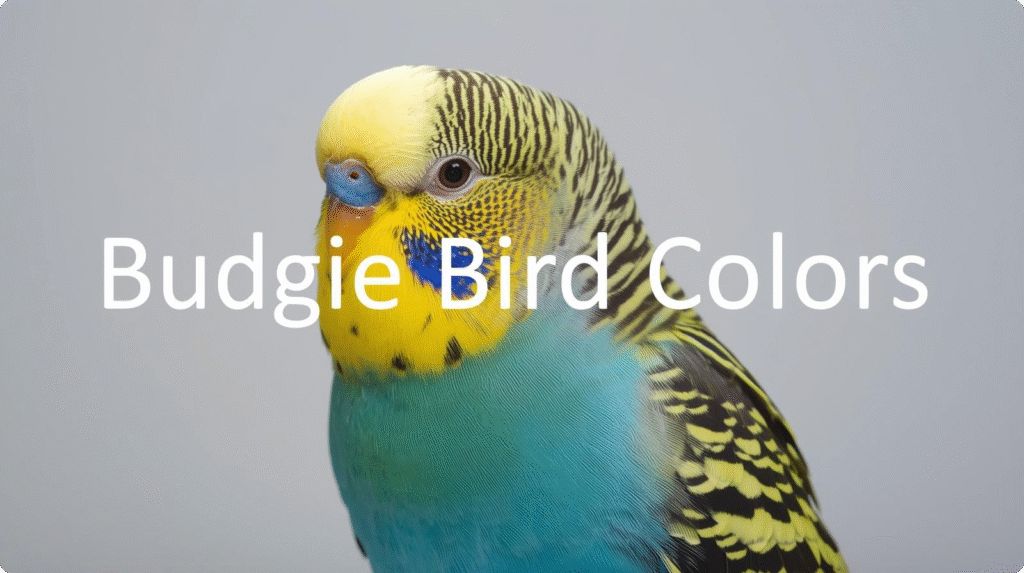
Before we explore the seven most stunning budgie colors, it’s important to know how these beautiful variations happen. In the wild, budgies are predominantly green with yellow faces and black barring patterns on their wings, heads, and backs. This coloration provides excellent camouflage in the Australian grasslands where they naturally reside.
How Budgie Colors Are Created
Budgie coloration results from two primary pigments:
- Psittacofulvins: Yellow pigments produced in the feathers
- Melanin: Dark pigments responsible for black and brown markings
The famous green color of wild budgies isn’t actually from a green pigment. Instead, yellow psittacofulvins combine with the blue structural color of the feathers to create it. Genetic mutations can change pigments or feather structure. This gives us the amazing variety of budgie bird colors we see today.
The Two Base Colors
All budgie bird colors fall into two fundamental categories:
- Green Series: Contains yellow pigment (psittacofulvins present)
- Blue Series: Lacks yellow pigment (psittacofulvins absent)
Every color mutation you’ll encounter is essentially a variation or combination stemming from these two base series.
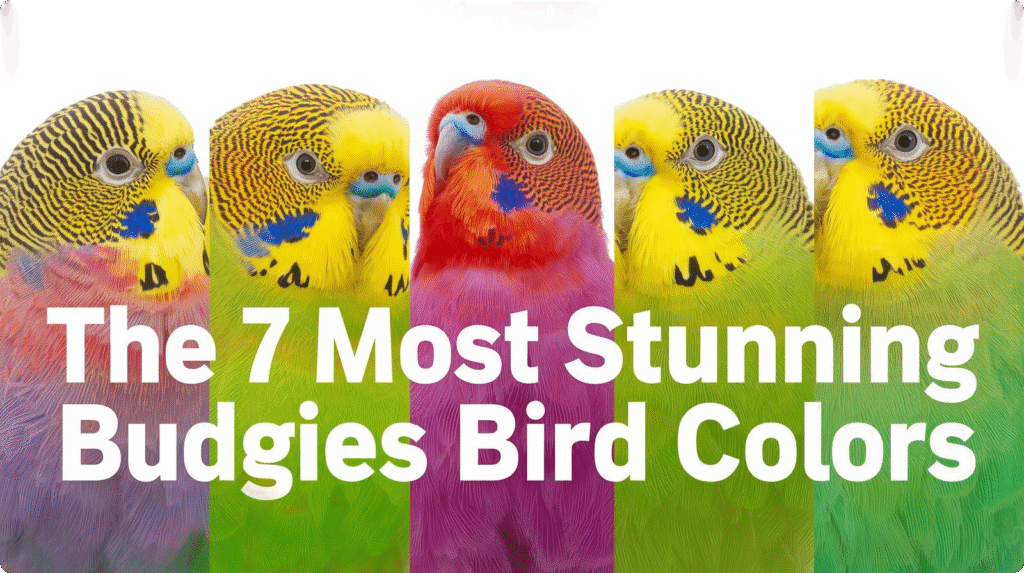
The 7 Most Stunning Budgie Bird Colors
1. Classic Green Budgies (Wild Type)
The original and most iconic of all budgie bird colors, the classic green budgie represents what nature intended. These birds feature:
Appearance Characteristics:
- Bright, vibrant green body feathers
- Yellow face and forehead (mask)
- Black and yellow barred patterns on wings, head, and back
- Blue tail feathers with yellow and black accents
- Black spots on throat (called throat spots)
Variations Within Green:
- Light Green: The brightest, most vivid green shade
- Dark Green: A deeper, forest-green coloration
- Olive Green: The darkest green variation with brownish undertones
Green budgies remain incredibly popular due to their striking natural beauty and the nostalgic connection to wild budgie populations. Many budgie enthusiasts believe that green varieties tend to be hardier since they’re closest to the original genetic makeup.
2. Beautiful Blue Budgies
Blue budgies represent one of the first color mutations discovered in captive breeding, appearing in Belgium around 1878. This mutation removes the yellow pigment and reveals the underlying blue structural color that yellow normally masks.
Appearance Characteristics:
- Sky-blue to cobalt body feathers
- Pure white face and mask
- Black and white wing markings
- Dark blue tail feathers
- Clear white or pale blue cere (nose area)
Variations Within Blue:
- Sky Blue: The lightest, most pastel shade
- Cobalt Blue: A medium, rich blue tone
- Mauve: The darkest blue variety with subtle purple undertones
Blue budgies are among the most sought-after budgie bird colors due to their striking appearance and elegant aesthetics. They often appear in movies and photographs representing the quintessential pet budgie.
3. Radiant Yellow (Lutino) Budgies
Lutino budgies are breathtakingly beautiful birds that showcase one of the most dramatic budgie bird colors available. The lutino mutation eliminates all melanin production, leaving only the yellow psittacofulvins.
Appearance Characteristics:
- Brilliant, pure yellow plumage throughout
- Red or ruby-colored eyes
- Pink or flesh-colored legs and feet
- No visible markings or barring
- Pink or purple cere
Special Considerations:
Lutino budgies require special care because:
- Their red eyes are more sensitive to bright light
- They may be prone to feather issues at the back of the head (lutino spot)
- They need shaded areas in their cage
The beautiful golden color of lutino budgies makes them very popular. Collectors and bird lovers want these unique colors for their aviaries.
4. Pure White (Albino) Budgies
Albino budgies represent the blue series equivalent of lutinos. They have both the blue mutation, which removes yellow pigment, and the ino mutation, which removes melanin. This leads to completely white feathers.
Appearance Characteristics:
- Snow-white feathers with no visible markings
- Red or ruby-colored eyes
- Pink legs, feet, and cere
- Completely unmarked wings and body
- Slightly translucent wing tips in some specimens
Care Requirements:
Similar to lutinos, albino budgies need:
- Protection from intense direct light
- Regular health monitoring
- Appropriate dietary supplements
White budgies epitomize purity and elegance among budgie bird colors. Their unique look makes them stand out in any collection. However, they need careful care because of their genetics.
5. Exotic Violet Budgies
Violet budgies are among the most coveted and visually stunning budgie bird colors available. The violet factor is a modifier that adds a gorgeous purple hue to the bird’s plumage.
Appearance Characteristics:
- Rich violet-purple body coloration
- Deep purple chest and belly
- White face (in visual violets from blue series)
- Dramatically colored wing markings
- Intense coloration throughout
Types of Violet Budgies:
- Visual Violet: Shows obvious purple coloration
- Single Factor Violet: Carries one violet gene
- Double Factor Violet: Carries two violet genes (most intense color)
Color Combinations:
Violet can combine with other colors to create:
- Violet cobalt (often the most visually striking)
- Violet sky blue
- Violet mauve
- Violet green series variants
The violet factor creates stunning colors in budgie birds. Their deep purple shades catch the light beautifully.
6. Sophisticated Gray Budgies
Gray budgies possess a refined elegance that sets them apart from other budgie bird colors. The gray mutation affects the distribution of melanin, creating a subtle yet sophisticated appearance.
Appearance Characteristics:
- Soft gray body coloration
- White face (blue series gray) or yellow face (green series gray)
- Distinct wing markings
- Calm, muted overall appearance
- Dark eyes with light iris ring
Variations:
- Gray Green: Combines gray with green series (sometimes called olive or khaki)
- Gray Blue: Pure gray on blue series base
- Light Gray vs. Dark Gray: Intensity variations
Gray budgies appeal to those who appreciate understated beauty. Their sophisticated coloring makes them excellent display birds and gentle companions.
7. Artistic Pied Budgies
Pied budgies showcase some of the most visually interesting budgie bird colors through their unique pattern variations. The pied mutation creates patches of clear (unpigmented) feathers among normally colored areas.
Types of Pied Patterns:
Dominant Pied (Australian Pied):
- Irregular patches of clear and colored feathers
- Unpredictable pattern distribution
- Often includes clear band across belly
Recessive Pied (Danish Pied):
- More extensive clear areas
- Typically shows color concentrated on lower body
- Often has solid-colored eyes (no iris ring)
Clearflight Pied:
- Clear primary flight feathers
- Clear tail feathers
- Body color remains relatively intact
Appearance Characteristics:
- Unique, one-of-a-kind patterns
- Combination of two or more colors
- Artistic, painted appearance
- Variable intensity and distribution
No two pied budgies look the same. This makes them very popular with collectors who love the unique colors of budgies.
Comprehensive Budgie Color Comparison Table
| Color Variety | Base Series | Rarity Level | Eye Color | Melanin Present | Yellow Pigment Present | Special Care Needed |
|---|---|---|---|---|---|---|
| Blue | Blue | Common | Dark with iris ring | Yes | No | Standard |
| Gray | Either | Uncommon | Dark with iris ring | Yes (modified) | Varies | Standard |
| Green (Wild Type) | Green | Common | Dark with iris ring | Yes | Yes | Standard |
| Pied | Either | Common to Rare | Varies by type | Partial | Varies | Standard |
| Violet | Either | Rare | Dark with iris ring | Yes | Varies | Standard |
| White (Albino) | Blue | Moderate | Red/Ruby | No | No | Light sensitivity |
| Yellow (Lutino) | Green | Moderate | Red/Ruby | No | Yes |
Rare and Exotic Budgie Bird Colors
Beyond the seven stunning varieties detailed above, several extremely rare budgie bird colors deserve mention:
Rainbow Budgies
Rainbow budgies combine multiple mutations to create spectacular multi-colored appearances. A true rainbow typically includes:
- Opaline mutation (modified wing pattern)
- Clearwing or greywing mutation
- Blue series base
- Often yellowface mutation added
Spangle Budgies
The spangle mutation reverses the normal feather markings:
- Wing feathers have light centers with dark edges
- Single factor spangles show modified markings
- Double factor spangles appear almost completely yellow or white
Anthracite Budgies
One of the rarest budgie bird colors:
- Extremely dark, almost black appearance
- Very limited availability
- Highly valued by serious breeders
Lacewing Budgies
Combining cinnamon and ino mutations:
- Pale brown wing markings on yellow or white body
- Red eyes
- Delicate, lacey appearance
The Genetics Behind Budgie Bird Colors
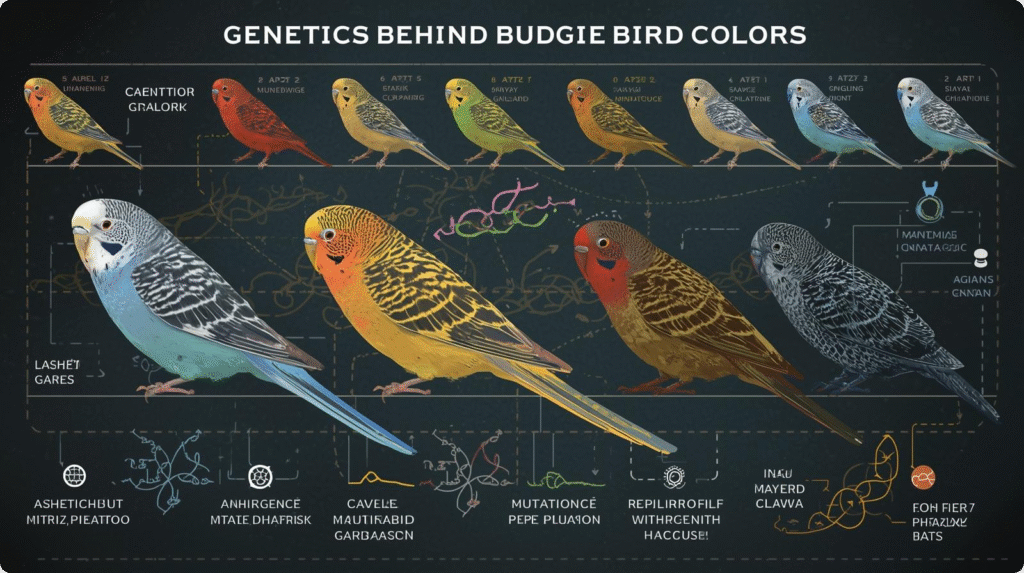
Understanding budgie color genetics helps us see how these beautiful colors happen. It also helps us predict them when breeding.
Basic Genetic Principles
Sex-Linked Mutations:
Some budgie bird colors are carried on the sex chromosomes:
- Ino (lutino and albino)
- Cinnamon
- Lacewing
- Opaline
Recessive Mutations:
Require two copies for visual expression:
- Recessive pied
- Fallow
- Some clearwing varieties
Dominant Mutations:
Only one copy needed for visual expression:
- Dominant pied
- Spangle
- Violet factor
Breeding for Specific Colors
When breeding for particular budgie bird colors:
- Understand parent genetics: Know what mutations each parent carries
- Use Punnett squares: Predict offspring color possibilities
- Track bloodlines: Maintain records of breeding outcomes
- Consider split birds: Carriers of recessive mutations without visual expression
How Budgie Colors Can Change Over Time
Many new budgie owners are surprised to learn that budgie bird colors can change throughout a bird’s life.
Young Budgies (Under 4 months)
- Colors may appear duller
- Barring extends over the forehead (capped appearance)
- Cere color indicates sex as bird matures
Adult Budgies:
- Colors intensify and brighten
- Forehead clears to show true mask color
- Full adult plumage develops
Senior Budgies:
- Some color fading may occur
- Feather quality might diminish
- Colors can become less vibrant
Health-Related Color Changes
Changes in budgie bird colors can indicate health issues:
- Dull feathers: Possible nutritional deficiency
- Color loss: Liver or kidney problems
- Unusual markings: Feather disease
- Brown spots: Potential fungal infection
Choosing Budgies Based on Color
When selecting budgies for their colors, consider these factors:
For Pet Owners
- Personal preference: Choose colors you find appealing
- Health first: Never prioritize color over bird health
- Temperament: Color doesn’t affect personality
- Special needs: Some colors require extra care
For Breeders
- Genetic understanding: Know what colors you can produce
- Market demand: Consider which budgie bird colors are popular
- Breeding goals: Have clear objectives
- Diversity: Maintain genetic variety
Color and Sex Identification
Budgie bird colors can sometimes make sex identification easier or harder:
Easy to sex:
- Normal wild-type colors
- Most solid mutations
Harder to sex:
- Albino and lutino (cere stays pale)
- Some pied varieties
- Very young birds of any color
Caring for Different Budgie Colors
While basic care remains consistent across all budgie bird colors, some variations require special attention:
Light-Sensitive Varieties (Lutino, Albino)
Environmental Considerations:
- Provide shaded areas in the cage
- Avoid direct sunlight exposure
- Use appropriate lighting levels
- Monitor for signs of light sensitivity
Health Monitoring:
- Watch for “lutino spot” baldness
- Regular veterinary check-ups
- Appropriate vitamin supplementation
Melanin-Free Varieties
Birds lacking melanin may have:
- Slightly weaker feathers
- Increased sensitivity
- Need for careful handling
All Color Varieties
Universal Care Requirements:
- Balanced, nutritious diet
- Clean, spacious housing
- Regular interaction and stimulation
- Fresh water daily
- Routine health checks
The History of Budgie Color Development
The journey of budgie bird colors from wild-type to today’s incredible variety is fascinating:
Timeline of Color Discoveries
1850s-1900s:
- First budgies exported to Europe
- Yellow mutations observed (1870s)
- Blue mutations appear (1878)
1900s-1950s:
- Albino and lutino discovered
- Pied mutations developed
- Cinnamon and opaline appear
1950s-Present:
- Violet factor introduced
- Spangle mutation discovered (1970s)
- Ongoing development of new combinations
Frequently Asked Questions About Budgie Bird Colors
What is the rarest budgie color?
Many people consider the anthracite budgie one of the rarest budgie bird colors, featuring an extremely dark, almost black appearance.
Other rare colors include the lacewing and certain rainbow combinations. True violet budgies, particularly double factor violets, are also relatively uncommon and highly prized.
Do budgie colors affect their personality?
No, budgie bird colors do not influence personality or behavior. A green budgie has the same potential for friendliness, talking ability, and trainability as any other color. Individual temperament, socialization, and handling determine personality, not plumage color.
Can two blue budgies produce green babies?
No, two visual blue budgies cannot produce green offspring. The blue mutation is recessive to green, meaning blue budgies lack the ability to produce yellow pigment. However, a blue budgie and a green budgie (carrying blue genes) can produce both blue and green babies.
Why is my budgie’s color fading?
Color fading in budgies can result from several factors:
- Poor nutrition (especially protein and amino acid deficiency)
- Age-related changes
- Illness or disease
- Excessive sunlight exposure
- Molting (temporary)
- Liver problems
Consult an avian veterinarian if you notice significant color changes in your budgie.
Are albino and white budgies the same?
Not exactly. True albino budgies have completely white feathers AND red eyes due to the absence of all pigments.
White budgies with dark eyes come from different genetic combinations, like double factor spangles. They are not true albinos, even though they look white.
How can I tell what color my baby budgie will be?
Predicting budgie bird colors in offspring requires understanding the genetics of both parents. While some colors are evident early, others develop as the bird matures. Key indicators include:
- Down feather color in the nest
- Pin feather coloration as wings develop
- Eye color (red eyes indicate ino mutations)
- Skin color visible through down
Which budgie colors are best for talking?
All budgie bird colors have equal potential for talking ability. The key factors for developing talking budgies include:
- Starting training young
- Consistent, patient training
- Individual bird personality
- Male budgies generally talk more than females
- Quality one-on-one time
Are certain colored budgies healthier?
Generally, budgies closer to wild-type (green) coloring may be slightly hardier due to less genetic manipulation. However, with proper care, budgies of any color can live healthy lives of 8-15 years.
The ino varieties (lutino and albino) may have some additional sensitivities but aren’t inherently unhealthy.
How do I breed for specific budgie colors?
Breeding for specific budgie bird colors requires:
- Understanding dominant and recessive genetics
- Knowing what mutations each parent carries (visual and split)
- Using genetic calculators or Punnett squares
- Keeping detailed breeding records
- Patience and realistic expectations
- Consulting experienced breeders
Can budgies change color completely?
Budgies cannot change color completely, but subtle changes occur:
- Juvenile to adult plumage transition
- Molting can temporarily affect appearance
- Illness may cause color changes
- Sun exposure can cause slight fading
- Age-related dulling in senior birds
Conclusion
The world of budgie bird colors is remarkably diverse and endlessly fascinating. Each color has its own beauty. There are classic wild-type green colors that nature created. There are also exotic violet and rare albino types that come from human breeding.
This guide on 7 stunning budgie bird colors looks at the most popular and eye-catching types. These include bright greens, calm blues, bright yellows, pure whites, unique violets, elegant grays, and creative pieds. Each of these budgie bird colors represents generations of careful breeding and genetic understanding.
You can appreciate budgies more by learning about their colors.
There are different types of budgies.
Some people like the natural beauty of a wild-type green budgie.
Others prefer the bright look of a visual violet.
Some enjoy the unique patterns of a pied variety.
Understanding these colors enhances your experience with these amazing pets. Remember that color is important when choosing a budgie. However, health, temperament, and proper care should be your main concerns.
As you explore the colorful world of budgie birds, you will find that each bird is unique. They differ not only in their feathers but also in their personality and charm. These amazing little parrots attract bird lovers all over the world. Their beautiful colors mean there is a perfect budgie for everyone.
Leave a Reply