


Have you ever encountered a bright green parrot chattering away in an unexpected urban setting? Chances are, you’ve met a Monk Parakeet. These remarkable birds have caught the attention of bird lovers and city dwellers alike. Their vibrant personalities and surprising adaptability stand out.
The Monk Parakeet, also known as the Quaker Parrot, is one of the most fascinating parrot species in the world. In this full guide, we will share seven fun facts about Monk Parakeets. These facts show why these birds are special and loved.
Whether you want a Monk Parakeet as a pet, have seen wild ones in your city, or are just curious, it helps to know them. Their unique traits will help you appreciate these charming birds more. From their amazing nest-building skills to their strong intelligence, the Monk Parakeet still surprises and delights all who meet them. Let’s discover what makes these green parrots truly extraordinary.
Understanding the Monk Parakeet
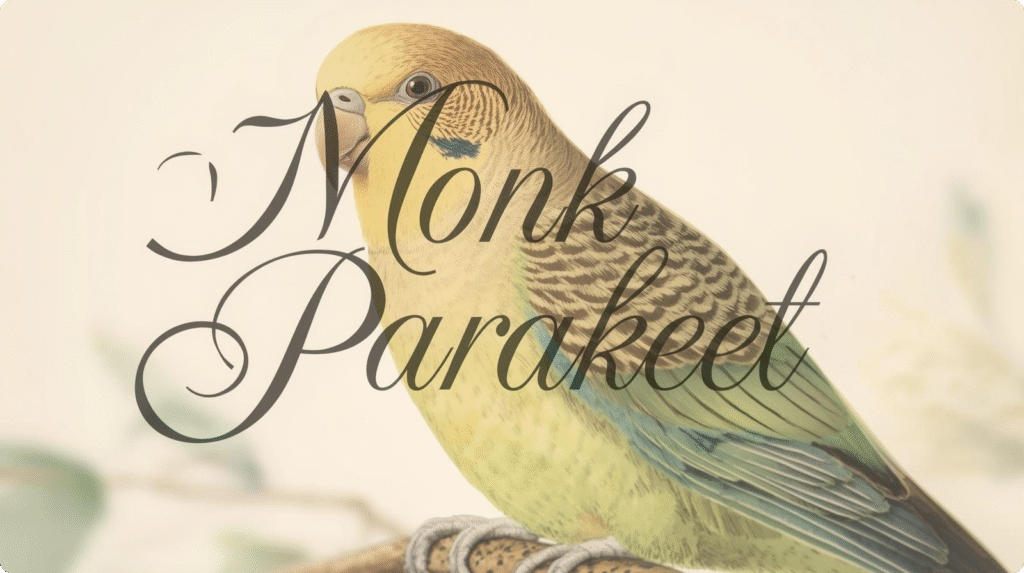
Before diving into our fun facts, let’s establish a foundation about what a Monk Parakeet actually is. These small to medium-sized parrots are native to South America, specifically Argentina, Brazil, and surrounding countries. They get their name from their grey chest and face markings, which some people think resemble the hood of a monk’s robe.
The Monk Parakeet typically measures 11-12 inches in length and weighs between 90-150 grams. They have bright green bodies, grey foreheads and chests, and blue flight feathers visible when they spread their wings. Their strong, curved beaks are pale orange or horn-colored, perfect for cracking seeds and nuts.
Natural Habitat and Range
In their native South America, Monk Parakeets inhabit grasslands, savannas, and agricultural areas. They particularly love areas with scattered trees and open spaces where they can forage for seeds and grains. Interestingly, these birds have formed wild groups in many parts of North America, Europe, and other continents. Many came from pets that escaped or were released.
The Monk Parakeet has proven remarkably successful at colonizing new areas, particularly urban environments. This adaptability is one of the most interesting aspects of these birds and speaks to their intelligence and resourcefulness.
Monk Parakeets Build Massive Communal Nests
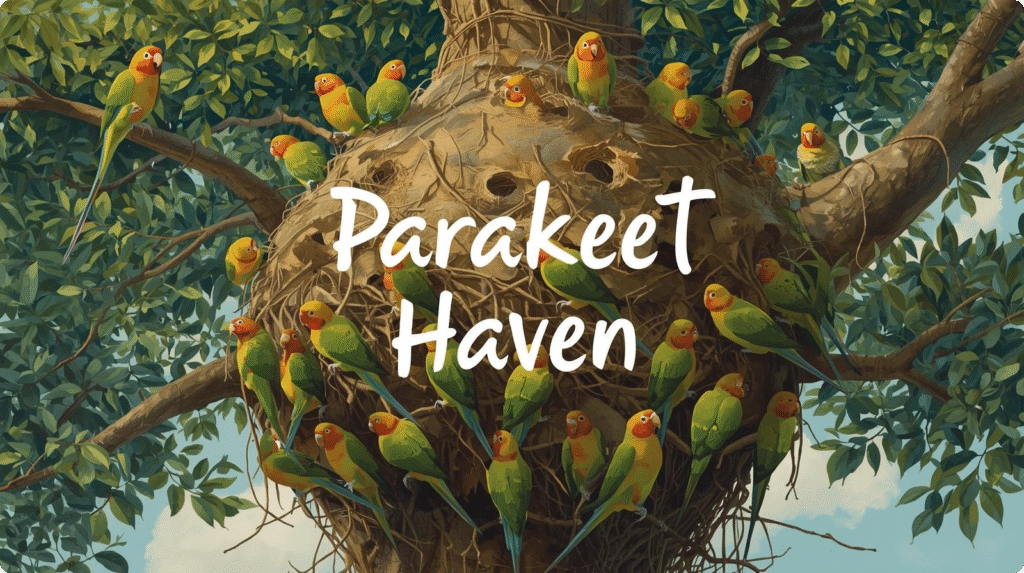
Perhaps the most remarkable feature of the Monk Parakeet is its unique nesting behavior. Unlike most parrots that nest in tree holes, the Monk Parakeet builds large stick nests. These nests can reach impressive sizes.
Architectural Masterpieces
The nest-building ability of the Monk Parakeet sets them apart from other parrots:
Construction materials: These birds use twigs, sticks, and branches to weave intricate structures. They carefully select and interlock materials to create sturdy walls and roofs.
Size matters: A single Monk Parakeet nest can grow to massive proportions. Some documented nests weigh over 200 pounds and measure several feet across. The largest recorded nests have contained over 200 individual chambers!
Multi-family housing: The genius of Monk Parakeet nests is their communal design. Multiple breeding pairs share the same structure, with each pair maintaining its own entrance and chamber. Think of it as a parrot apartment building.
Year-round use: While many birds build seasonal nests, the Monk Parakeet lives in and maintains its nest throughout the year. They continuously repair and expand their structures.
Strategic placement: In their native habitat, Monk Parakeets often build in tall trees. In urban areas, they frequently choose utility poles, cell towers, and building ledges. This has occasionally caused conflicts with power companies.
Why This Behavior Is Unique
The Monk Parakeet is the only parrot species in the world that builds stick nests. All other parrots use tree cavities, cliff faces, or termite mounds for nesting. This behavior helps Monk Parakeets thrive where there are no suitable natural cavities. It also supports their success in new environments.
Benefits of Communal Living
Building and living in communal nests provides several advantages for the Monk Parakeet:
- Protection from predators: Multiple birds can watch for danger and defend the nest together
- Temperature regulation: The mass of the nest provides insulation against cold and heat
- Social bonding: Close proximity strengthens flock bonds and facilitates communication
- Shared maintenance: Multiple pairs share the work of maintaining and expanding the structure
- Learning opportunities: Young birds learn nest-building skills by observing experienced adults
Implications for Pet Owners
Understanding the Monk Parakeet‘s natural building instinct helps pet owners provide better care. In captivity, these birds maintain a strong desire to build and modify their environment. Owners should provide:
- Plenty of safe sticks and twigs for chewing and arranging
- Cardboard boxes or paper for shredding
- Foraging toys that encourage manipulation
- Regular opportunities to rearrange cage accessories
- A nest box filled with safe materials they can modify
Without appropriate outlets, a Monk Parakeet may become frustrated and develop behavioral problems.
They’re Highly Intelligent Problem Solvers

The Monk Parakeet ranks among the smartest parrot species. Their cognitive abilities consistently impress researchers and owners alike, demonstrating problem-solving skills that rival much larger parrots.
Cognitive Capabilities
Research and observation reveal impressive mental abilities in the Monk Parakeet:
Memory: These birds remember people, places, and experiences for years. A Monk Parakeet can recognize individual humans even after long separations.
Problem-solving: They can figure out how to open cage latches, work puzzle toys, and manipulate objects to achieve goals. Many owners report their Monk Parakeet learning to open cabinets or drawers.
Tool use: Some Monk Parakeets use objects as tools to reach food or do tasks. This shows advanced planning skills.
Social learning: The Monk Parakeet learns by watching others, both birds and humans. This allows them to pick up new behaviors quickly.
Cause and effect: These birds understand that their actions produce specific results and can use this knowledge strategically.
Language and Communication
The Monk Parakeet excels at vocal communication:
Talking ability: Many Monk Parakeets become excellent talkers, learning vocabularies of 50-100 words or more. Their clear voices make them easier to understand than some other parrots.
Contextual use: Smart Monk Parakeets learn to use words appropriately. They might say “hello” when someone arrives or ask for “water” when thirsty.
Sound mimicry: Beyond words, the Monk Parakeet copies household sounds with amazing accuracy. Phone rings, doorbells, alarm clocks, and other birds are all fair game.
Flock communication: Wild Monk Parakeets use complex vocalizations to coordinate flock activities, warn of danger, and maintain social bonds.
Training Potential
The intelligence of the Monk Parakeet makes them highly trainable:
- Step-up command for easy handling
- Recall training to come when called
- Tricks like waving, spinning, or playing basketball
- Target training for veterinary procedures
- Potty training to specific locations
- Foraging skills for mental stimulation
Training provides crucial mental exercise for the Monk Parakeet while strengthening the bond between bird and owner.
Enrichment Needs
Because of their high intelligence, the Monk Parakeet requires substantial mental stimulation:
“`text
Puzzle toys: Toys that need handling to get treats.
Foraging opportunities: Hide food in many spots to support natural searching.
Novel objects: Add new items often to explore and inspect.
Training sessions: Practice tricks or new behaviors every day.
Social interaction: Talk and play with human family members.
Environmental changes: Rearrange cage items from time to time.
“`
Without adequate enrichment, an intelligent Monk Parakeet may become bored, leading to screaming, feather plucking, or aggressive behavior.
Monk Parakeets Are Incredibly Adaptable
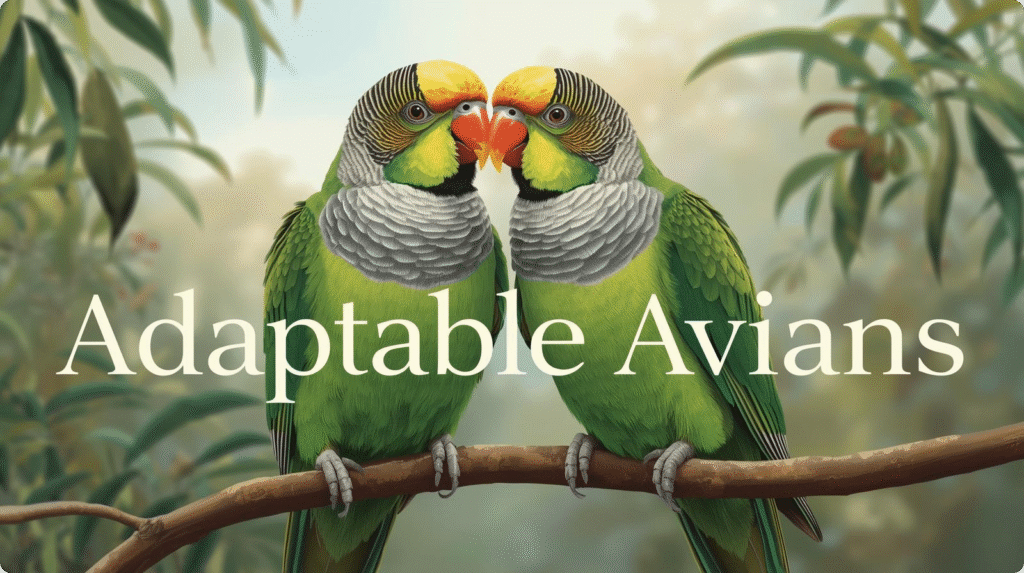
One of the most fascinating aspects of the Monk Parakeet is their remarkable ability to adapt to diverse environments. This adaptability has allowed them to establish wild populations far from their native South America.
Climate Tolerance
Unlike most parrots that require tropical conditions, the Monk Parakeet tolerates a wide range of temperatures:
Cold hardiness: These birds can survive surprisingly cold winters. Wild Monk Parakeet populations thrive in Chicago, New York, and other northern cities. Winter temperatures there often drop below freezing.
Heat adaptation: The Monk Parakeet also handles warm climates well, though they need shade and water during extreme heat.
Seasonal adjustments: These smart birds modify their behavior based on seasons. They eat more during cold months and may become less active during peak heat.
Nest insulation: Their large communal nests provide excellent temperature regulation. The interior stays warmer in winter and cooler in summer than outside temperatures.
Urban Success Stories
The Monk Parakeet has colonized numerous cities worldwide:
United States: Large populations exist in Florida, Texas, New York, New Jersey, and Illinois. Brooklyn’s Green-Wood Cemetery hosts one of the most famous colonies.
Europe: Wild Monk Parakeets live in Spain, Belgium, Netherlands, and other countries. Barcelona has a particularly large and visible population.
Asia: Researchers have reported smaller populations in Japan and other Asian countries.
South America: Beyond their native range, Monk Parakeets have colonized cities like Rio de Janeiro and other urban areas
Why They Succeed in Cities
Several factors contribute to urban Monk Parakeet success:
Food availability: Cities offer abundant food sources including parks, gardens, bird feeders, and agricultural areas on city outskirts.
Nesting sites: Urban infrastructure like utility poles and buildings provide excellent nesting locations.
Fewer predators: Cities have fewer natural predators than wild habitats.
Year-round resources: Urban environments provide consistent food and shelter throughout seasons.
Human tolerance: Many people enjoy wild Monk Parakeet populations and actively support them.
Dietary Flexibility
The Monk Parakeet adapts its diet based on available resources:
Native diet: Seeds, grains, fruits, nuts, flowers, and occasionally insects
Urban foraging: Bird feeders, fruit trees, ornamental plants, agricultural crops
Seasonal variety: Different foods at different times of year
Opportunistic feeding: Quick to take advantage of new food sources
This dietary flexibility contributes significantly to Monk Parakeet success in diverse environments.
Implications of Adaptability
The adaptability of the Monk Parakeet is both impressive and occasionally controversial:
Ecological concerns: In some areas, wild populations compete with native species for resources. People have also reported agricultural damage.
Infrastructure challenges: Large nests on power lines can cause electrical problems and safety hazards.
Biodiversity questions: Scientists debate whether introduced Monk Parakeet populations harm or help local ecosystems.
Legal status: Some jurisdictions restrict or ban Monk Parakeets due to concerns about wild populations, while others embrace them.
They Have Strong Social Bonds and Personalities
The Monk Parakeet is an extremely social bird with complex emotional needs and distinct individual personalities. Understanding their social nature is crucial for anyone considering these birds as pets.
Flock Mentality
In the wild, the Monk Parakeet lives in large flocks:
Community living: Flocks range from dozens to hundreds of birds sharing communal nest structures and foraging areas.
Social hierarchy: Within flocks, Monk Parakeets establish social orders with dominant and submissive individuals.
Cooperative behavior: Flock members work together to defend territories, raise young, and find food.
Communication: Constant vocalizations keep flock members in contact and coordinate activities.
Bonding with Humans
When kept as pets, the Monk Parakeet transfers flock instincts to their human family:
Deep attachments: These birds form strong bonds with favorite people. A well-socialized Monk Parakeet can be an affectionate, devoted companion.
Jealousy: Some birds become possessive of their favorite person and may show aggression toward others.
Attention needs: As flock animals, Monk Parakeets require several hours of daily interaction. Neglected birds can become depressed or develop behavioral problems.
Family inclusion: The Monk Parakeet wants to be part of household activities. They’re happiest when they can observe and participate in family life.
Individual Personalities
Each Monk Parakeet develops unique personality traits:
Bold adventurers: Some birds are fearless explorers eager to investigate everything new.
Cautious observers: Others are more careful, preferring to watch before trying new things.
Cuddly companions: Some Monk Parakeets love physical affection, enjoying pets and scratches.
Independent spirits: Others prefer interactive play without much physical contact.
Vocal performers: Some birds talk constantly, while others are relatively quiet.
Playful clowns: Many Monk Parakeets are natural entertainers who seem to enjoy making their humans laugh.
Emotional Complexity
The Monk Parakeet experiences a range of emotions:
Joy and excitement: Displayed through singing, dancing, and playful behavior
Affection: Shown through preening their favorite humans and regurgitating food (a sign of love in birds)
Anxiety: Can develop when routines change or when separated from bonded individuals
Anger: May bite or scream when frustrated or feeling threatened
Depression: Neglected Monk Parakeets can become listless and develop health problems
Meeting Social Needs
Provide appropriate social stimulation for your Monk Parakeet:
- Daily interaction of 2-4 hours minimum
- Training sessions for mental engagement
- Inclusion in family activities when safe
- Conversation throughout the day
- Out-of-cage time in bird-safe areas
- Consider getting two birds if you’re away frequently
- Respect your bird’s communication and boundaries
Monk Parakeets Can Live 20-30 Years
Many people are surprised to learn that a Monk Parakeet can be a very long-term companion. With proper care, these birds often live for decades, making them one of the longer-lived pet bird species.
Expected Lifespan
The longevity of a Monk Parakeet depends on several factors:
Captive lifespan: 20-30 years with proper care is typical. Some individuals have lived into their 30s.
Wild lifespan: Generally shorter due to predators, disease, and environmental challenges. Wild Monk Parakeets typically live 10-15 years.
Record ages: The oldest documented Monk Parakeets have lived over 30 years in captivity.
Factors Affecting Longevity
Several elements influence how long your Monk Parakeet will live:
Diet quality: Nutrition is perhaps the most important factor. A balanced diet dramatically extends lifespan compared to seed-only diets.
Veterinary care: Regular check-ups with an avian veterinarian catch health problems early when they’re most treatable.
Exercise: Daily flight and physical activity maintain cardiovascular health and muscle tone.
Mental stimulation: An engaged, stimulated Monk Parakeet typically lives longer than a bored, neglected bird.
Genetics: Some birds inherit better health than others. Choosing reputable breeders helps ensure good genetic health.
Environment: Clean housing, appropriate temperature, and stress-free surroundings support longevity.
Accident prevention: Many premature deaths result from preventable accidents. Bird-proofing and supervision are essential.
Age-Related Changes
As your Monk Parakeet ages, you may notice changes:
Activity levels: Senior birds typically become less active and may fly less than youngsters.
Sleep patterns: Older Parakeets often sleep more and may nap during the day.
Dietary needs: Some seniors need softer foods or adjusted portion sizes.
Health monitoring: Increased veterinary attention becomes important for aging birds.
Behavioral shifts: Older birds may become more set in their ways or experience personality changes.
Commitment Considerations
The long lifespan of a Parakeet means getting one is a serious commitment:
Life stages: Your bird will be with you through major life changes like moves, career shifts, relationships, and possibly having children.
Financial planning: Budget for 20-30 years of food, supplies, and veterinary care.
Future planning: Consider what would happen to your Parakeet if you could no longer care for them. Include provisions in your will.
Relationship investment: The decades-long bond you’ll build with your bird is profound and rewarding.
Maximizing Lifespan
Help your Monk Parakeet live a long, healthy life:
- Feed a varied diet of pellets, vegetables, and limited fruits
- Provide daily exercise through flight time
- Schedule annual veterinary check-ups
- Maintain clean living conditions
- Offer mental stimulation through toys and training
- Monitor for illness signs and address them quickly
- Avoid toxic substances like non-stick cookware fumes and aerosols
- Create a safe environment free from accident hazards
- Provide social interaction and emotional support
They’re Vocal and Moderately Noisy
The Monk Parakeet has a reputation for being vocal, which potential owners should understand before bringing one home. While they’re not as loud as large parrots like cockatoos or macaws, they do make their presence known.
Natural Vocalizations
The Monk Parakeet uses various sounds for communication:
Contact calls: Loud calls used to locate flock members. Wild Parakeets use these to maintain flock cohesion. Pet birds may call when separated from their human flock.
Alarm calls: Sharp, loud warnings when danger is detected.
Social chatter: Continuous soft talking and chirping during activities.
Singing: Melodious sounds when content and happy.Screaming: Loud vocalizations when excited, frustrated, or seeking attention.
Volume and Frequency
Understanding Monk Parakeet noise levels helps set realistic expectations:
Moderate volume: Louder than small birds like budgies but quieter than large parrots. Most people can tolerate the noise level, but apartment dwellers should consider neighbors.
Peak times: Parakeets are typically loudest at dawn and dusk, which corresponds to natural flock activity times.
Duration: Calling sessions usually last 15-30 minutes during peak times.
Individual variation: Some birds are naturally quieter than others. Males tend to be more vocal than females.
Managing Noise
While you can’t eliminate vocalizations (nor should you, as they’re natural behavior), you can manage them:
Training: Reward quiet behavior and ignore attention-seeking screaming (unless checking for problems).
Routine establishment: Parakeets with predictable routines are often quieter.
Adequate attention: Birds that receive enough interaction are less likely to scream for attention.
Environmental enrichment: Busy, stimulated birds have less reason to scream from boredom.
Cover at night: Providing 10-12 hours of darkness helps regulate behavior and may reduce morning calling.
Talking vs. Screaming
The Monk Parakeet is capable of extensive vocabulary:
Talking ability: Many learn 50-100+ words with clear pronunciation.
Contextual speech: Smart birds learn appropriate times to use words.
Preferred sounds: Some Parakeets prefer talking over screaming, especially when encouraged.
Training focus: Emphasizing talking through positive reinforcement can reduce excessive screaming.
Neighbor Considerations
If you live in close quarters with neighbors:
- Inform them about your pet before problems arise
- Establish quiet hours
- Place cages away from shared walls when possible
- Address excessive noise promptly
- Be responsive to reasonable complaints
Most neighbors tolerate well-managed Monk Parakeet noise, especially when owners are considerate.
Monk Parakeets Are Illegal in Some Locations
Due to their adaptability and potential to establish wild populations, the Parakeet faces legal restrictions in some areas. Understanding these regulations is crucial before acquiring one.
Why Restrictions Exist
Several concerns have led to Monk Parakeet regulations:
Agricultural impact: In some areas, wild Parakeets damage crops, particularly fruit and grain fields.
Infrastructure concerns: Their large nests on power lines can cause electrical problems and power outages.
Ecosystem effects: As non-native species, wild Parakeets may compete with native birds for resources.
Population control: Once established, wild populations are extremely difficult to eliminate.
Where Monk Parakeets Are Restricted
Legal status varies by location:
United States restrictions:
- California: Banned
- Connecticut: Restricted
- Hawaii: Banned
- Kansas: Banned
- Kentucky: Restricted
- Pennsylvania: Restricted
- Tennessee: Banned
- Wyoming: Banned
Other states: Generally legal but check local regulations as city or county laws may differ from state rules.
International: Many countries regulate parrot imports and ownership. Check specific national and local laws.
Legal Alternatives
If you live where Parakeets are restricted:
Similar species: Consider legal alternatives like budgies, cockatiels, or green-cheeked conures
Relocation: Some people move to areas where these birds are legal, though this is an extreme solution
Advocacy: Work to change laws if you believe restrictions are unjustified
Compliance: Always follow local laws regardless of personal opinions
Responsible Ownership
Even where legal, responsible Parakeet ownership is important:
Prevent escapes: Ensure your bird is properly housed and cannot escape to establish wild populations
Microchipping: Consider permanent identification
Support conservation: Contribute to programs protecting wild parrots in their native habitats
Education: Help others understand both the benefits and challenges of Monk Parakeet ownership
Checking Regulations
Before getting a Monk Parakeet, verify legal status:
- Check state wildlife agency websites
- Contact local animal control
- Consult exotic pet veterinarians
- Research city and county ordinances
- Join online parrot owner communities for local information
Legal consequences of owning banned species can include fines, confiscation of your bird, and even criminal charges. Always verify before acquiring a Parakeet.
Comparison: Monk Parakeet vs. Other Popular Pet Parrots
| Feature | Budgerigar | Green-Cheeked Conure | Monk Parakeet | Cockatiel |
|---|---|---|---|---|
| Size | 6-7 inches | 10 inches | 11-12 inches | 12-13 inches |
| Weight | 30-40 grams | 60-80 grams | 90-150 grams | 80-125 grams |
| Lifespan | 10-15 years | 15-30 years | 20-30 years | 15-25 years |
| Noise Level | Quiet to moderate | Moderate | Moderate to loud | Moderate |
| Talking Ability | Good | Fair | Excellent | Fair to good |
| Intelligence | High | Very high | Very high | High |
| Social Needs | High | Very high | Very high | High |
| Cuddliness | Low to moderate | High | Variable | Moderate to high |
| Price Range | $15-$50 | $150-$400 | $200-$500 | $75-$200 |
| Cage Size Needed | Medium | Large | Large | Large |
| Legal Status | Legal everywhere | Legal everywhere | Restricted some areas | Legal everywhere |
| Nest Building | Uses nest boxes | Uses nest boxes | Unique stick nests | Uses nest boxes |
Caring for Your Monk Parakeet
Understanding these fun facts is just the beginning. Proper care ensures your Monk Parakeet thrives:
Housing Requirements
Cage size: Minimum 24 x 24 x 24 inches for one bird. Larger is always better.
Bar spacing: No more than 3/4 inch to prevent escape or injury.
Perches: Natural wood branches of varying diameters for foot health.
Location: In a family area at eye level where your Monk Parakeet can observe household activities.
Temperature: Maintain 65-80°F, avoiding drafts and direct sunlight.
Diet and Nutrition
Base diet: High-quality pellets should comprise 60-70% of daily intake.
Fresh vegetables: Offer daily (20-30% of diet). Include leafy greens, carrots, broccoli, peppers, and squash.
Fruits: Limited amounts as treats (5-10% of diet). Apples, berries, and melons work well.
Seeds: Occasional treats only due to high fat content.
Fresh water: Changed daily, more often if soiled.
Toxic foods: Never feed avocado, chocolate, caffeine, alcohol, or high-salt foods.
Daily Care
Your Monk Parakeet needs consistent daily attention:
- Fresh food and water morning and evening
- Social interaction for 2-4 hours
- Out-of-cage flight time in supervised, bird-safe areas
- Mental stimulation through toys, training, or foraging activities
- Observation for health changes
- Basic cage maintenance (remove droppings and fallen food)
Health Maintenance
Veterinary care: Annual check-ups with an avian veterinarian are essential.
Grooming: Nail trims every 6-8 weeks and occasional wing clipping if desired.
Bathing: Offer bathing opportunities 2-3 times weekly through dishes or misting.
Monitoring: Watch for signs of illness including changes in eating, droppings, breathing, or behavior.
Frequently Asked Questions About Monk Parakeets
Are Monk Parakeets good pets for beginners?
The Monk Parakeet can be a good pet for committed beginners, but it needs more care than some other species. They need several hours of daily interaction, consistent training, and proper socialization. Beginners should thoroughly research care requirements and honestly assess whether they can meet these birds’ high social needs.
Their intelligence makes them trainable, but also means they need substantial mental stimulation. For someone willing to invest time and effort, a Monk Parakeet can be a rewarding first parrot. However, those seeking low-maintenance pets should consider less demanding species.
Do Monk Parakeets bite?
Like all parrots, Parakeets can and do bite, especially when frightened, protective, or poorly socialized. However, well-trained birds rarely bite hard. Their bites are less severe than larger parrots but can still be painful.
Birds bite most during hormonal periods, when they feel threatened, or when someone doesn’t respect their boundaries. Proper socialization, understanding body language, and positive reinforcement training dramatically reduce biting.
A Parakeet raised with gentle handling and clear boundaries typically becomes a friendly companion. Never punish biting, as this increases fear and aggression. Instead, identify triggers and address the underlying cause.
Can Monk Parakeets live with other birds?
Monk Parakeets can live with other birds of the same species, but housing them with different species requires caution. They’re generally peaceful with other Monk Parakeets when properly introduced and given adequate space. However, they may be territorial or aggressive toward other parrot species, particularly during breeding season.
Size differences create safety concerns when housing Parakeets with much smaller or larger birds. You should supervise even compatible species at first and house them in cages large enough to prevent territorial disputes.
Some Monk Parakeets prefer being only birds, while others enjoy companionship. Always introduce birds gradually and monitor interactions closely.
How much does it cost to own a Monk Parakeet?
Owning a Monk Parakeet involves both initial and ongoing costs. Initial costs include the bird ($200 to $500).
They also include the cage and setup ($200 to $500).
You will need toys and accessories ($50 to $100).
You should also plan for a first vet checkup ($100 to $200). Monthly costs typically include food ($30-$50), new toys ($10-$30), and miscellaneous supplies ($10-$20).
Annual veterinary check-ups cost $100-$300, with potential emergency visits costing much more. Over a 25-year lifespan, total costs can exceed $20,000-$30,000. Potential owners should budget with care. Before getting a Monk Parakeet, they should afford routine care and surprise vet bills.
What’s the difference between a Monk Parakeet and a Quaker Parrot?
There is no difference. Monk Parakeet and Quaker Parrot are two names for the same species.
The scientific name is Myiopsitta monachus. In the United States, people often call them Quaker Parrots. The name refers to the Quaker religious group.
This is because of the birds’ grey chest markings. Some people think these markings look like Quaker clothing. In other parts of the world, particularly Europe and South America, they’re more commonly known as Monk Parakeets.
Both names refer to the same bright green parrot with grey chest and face markings that builds unique stick nests. Regardless of which name you use, you’re talking about the same bird.
Can Monk Parakeets survive winter in cold climates?
Yes, Monk Parakeets can survive surprisingly cold winters, which is unusual for parrots. Wild populations thrive in cities like Chicago and New York where winter temperatures regularly drop below freezing. Their large communal nests provide excellent insulation, helping them survive cold weather.
However, you should not expose pet Parakeets kept indoors to extreme cold. While they handle cool temperatures better than tropical parrots, sudden temperature shifts can still harm them.
Indoor pet birds should be kept in temperatures between 65-80°F. Never leave your Monk Parakeet outdoors in winter or expose them to drafts and temperature extremes.
Do Monk Parakeets need a companion bird?
A Monk Parakeet can be happy either alone or with a companion, depending on circumstances. Single birds can thrive with several hours of daily time with people. They often bond more closely with their owners.
However, if you work long hours or travel often, get two Parakeets. They can keep each other company.
Paired birds may bond more with each other than with humans, potentially being less interested in interaction. The cage size must double for two birds (minimum 36 x 24 x 24 inches). Consider your lifestyle, available time, and goals when deciding whether to get one or two birds.
How can I stop my Monk Parakeet from screaming?
While you cannot stop all sounds from a Parakeet, and you should not, you can reduce loud screaming. Ensure your bird receives adequate daily attention (2-4 hours), as screaming often indicates boredom or loneliness.
Establish consistent routines, as birds with predictable schedules are typically quieter. Provide plenty of toys and rotate them regularly to prevent boredom.
Never reinforce screaming by responding with attention or food, as this teaches the bird that screaming works. Instead, reward quiet behavior with treats and praise. Cover the cage at night for 10-12 hours to ensure adequate rest.
If screaming continues after these steps, see an avian vet to rule out health issues. Consider working with a bird behaviorist too.
Conclusion
The Monk Parakeet is truly a remarkable bird that offers a unique combination of intelligence, personality, and adaptability. These seven fun facts only begin to capture what makes these green parrots so special.
From their amazing nest-building skills to their strong problem-solving abilities, Monk Parakeets fascinate bird lovers and researchers. They are very social birds. They can also handle cold weather better than many people expect.
Understanding these facts helps potential owners make informed decisions about whether a Parakeet is right for them. These birds require significant commitment in terms of time, attention, social interaction, and financial resources. They can be noisy, messy, and demanding. However, for those willing to meet their needs, a Parakeet offers decades of companionship, entertainment, and affection.
The Parakeet has proven itself to be one of the most adaptable parrot species on Earth. Their success in establishing wild populations across multiple continents demonstrates their resourcefulness and intelligence. Whether you see these birds in the wild or keep them as pets, they show how diverse the parrot family is.
They also show how adaptable parrots can be.
If you want to add a Parakeet to your family, take time to research first.
Check if they are legal in your area.
Find a trusted breeder or adoption source.
Prepare a safe and suitable home for your bird. Understand the long-term commitment involved. Honestly assess if you can provide the daily interaction these social birds need.
With good preparation and care, a Parakeet can become a loved family pet. It can bring joy, laughter, and companionship for many years.
These bright green parrots have grey, monk-like hoods.
They remind us that the most fascinating creatures bridge wild and domestic life. The Parakeet still surprises, challenges, and delights us. It proves that even well-studied species have secrets to share and lessons to teach.
Leave a Reply